Latgalian Language as a Full-Fledged Expression Tool in Theatre – Three Productions Prove Its Power
Three Latvian theatre productions – Daugavpils Theatre's "Hecuba" and "Someone Will Come", and Latvian Puppet Theatre's "Sunāns!" – use Latgalian not as a comic device, but as a serious artistic instrument that enriches their narratives.
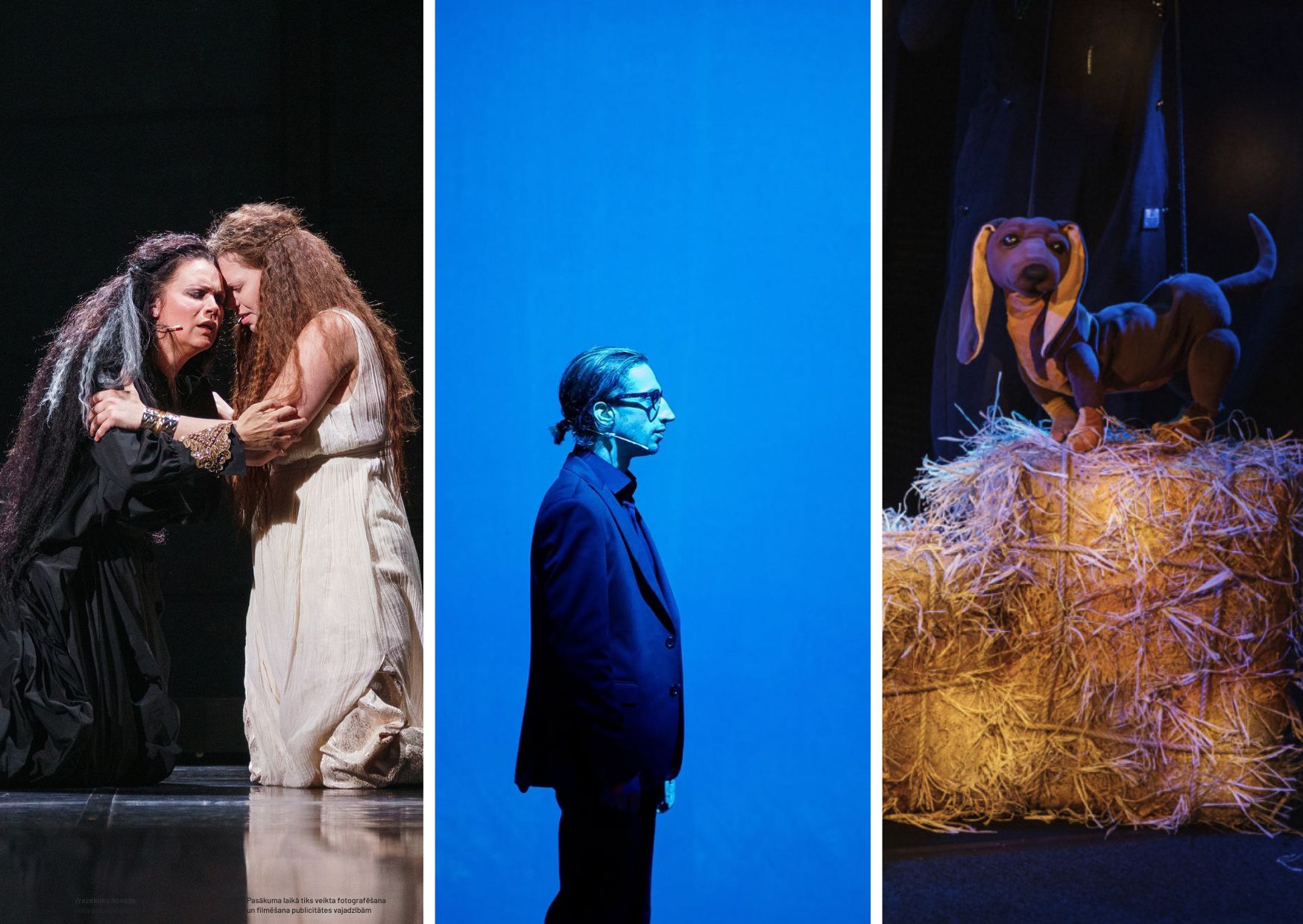
Theatre critic Kitija Balcare examines the role of the Latgalian language in contemporary Latvian theatre, focusing on three productions that demonstrate its versatility. At Daugavpils Theatre, Euripides' tragedy "Hecuba" (directed by Tatjana Stepančenko-Bogdana) uses Latgalian to highlight power dynamics: the Trojan queen Hecuba speaks Latgalian while Greek heroes speak Latvian, creating tension between languages. "Someone Will Come", based on Jon Fosse's play translated from Nynorsk, gains a poetic, rhythmic quality in Latgalian, with repetitions functioning as a protective ritual. Meanwhile, the Latvian Puppet Theatre's "Sunāns!" (inspired by a comic by Laura Melne and Vivianna Marija Stanislavska) tells the story of a dog from Riga meeting local cats in Latgale, where Latgalian becomes a space for encounter. The production also incorporates folk song motifs and Latgalian music. Balcare emphasizes that in all three plays, Latgalian is not merely a comic device but a full-fledged expressive tool capable of conveying ancient tragedy, contemporary drama, and children's theatre. Notably, actors for whom Latgalian is not their native language learned it for the productions, demonstrating professionalism. These performances attest to the vitality of Latgalian in theatre and its ability to address important issues while reflecting regional identity and intercultural dialogue.