Latvian diplomats organize return of refugees after World War I
In September 1919, the Latvian Ministry of Foreign Affairs began establishing consulates abroad, with a key mission in Soviet Russia to assist Latvian refugees and citizens wishing to return home. The demographic impact of the wars was significant.
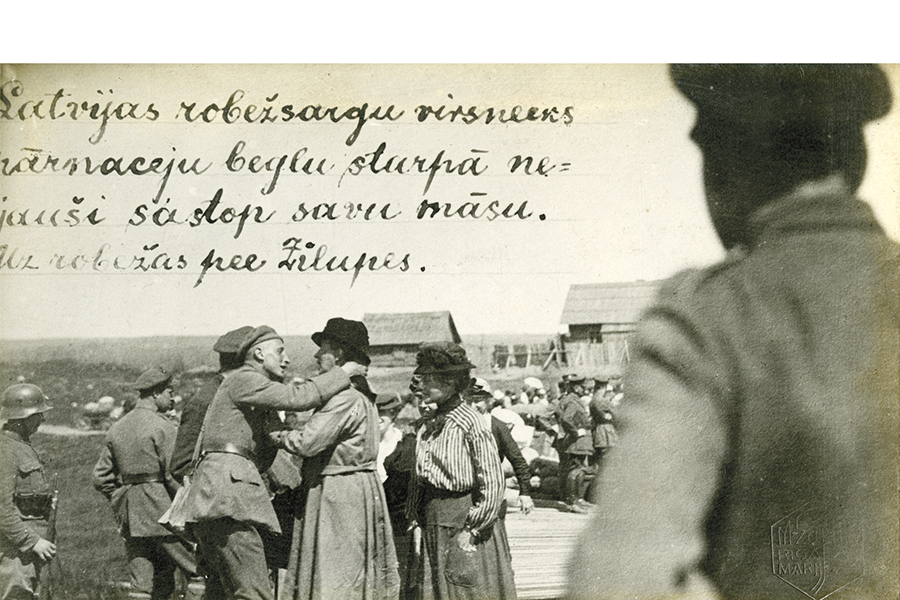
In September 1919, while the Latvian War of Independence was still ongoing, the Economic Consular Department of the Latvian Ministry of Foreign Affairs started setting up consulates abroad. Their primary goal was to establish diplomatic relations, but in Soviet Russia the most important task was to represent the interests of Latvian refugees and citizens who wanted to return to their homeland.
A Latvian legation began operating in Moscow, and a consulate in Petrograd (later Leningrad). Between 1920 and 1923, the Latvian Consulate General in Moscow, consulates in Omsk (1921–1923), Nizhny Novgorod (1920–1921), Vitebsk (1925–1932), and a consular agency in Vladivostok (1920–1923) were active.
World War I, the Latvian War of Independence, and the Russian Civil War caused major demographic changes in Latvia, the full extent of which has not yet been fully assessed. In the spring of 1918, there were about 700,000 Latvians in Russia, though experts believe this number may be slightly exaggerated. This figure included not only refugees but also residents of Latvian colonies and discharged soldiers from the old Russian Imperial Army.
In 1919, during the rule of the Latvian Socialist Soviet Republic led by Pēteris Stučka, some Latvians had already returned to Latvia, but it happened in a disorganized manner. Latvian diplomatic efforts helped bring structure to the repatriation process.
/nginx/o/2025/03/25/16735972t1h9a7c.jpg)