Lithuanian publisher plans critical edition of Mein Kampf, drawing sharp criticism
The Lithuanian publishing house Obuolys has announced the first Lithuanian edition of Hitler's Mein Kampf. Dario Martinelli, a professor at Kaunas University of Technology, sharply criticises the plan in an opinion piece.
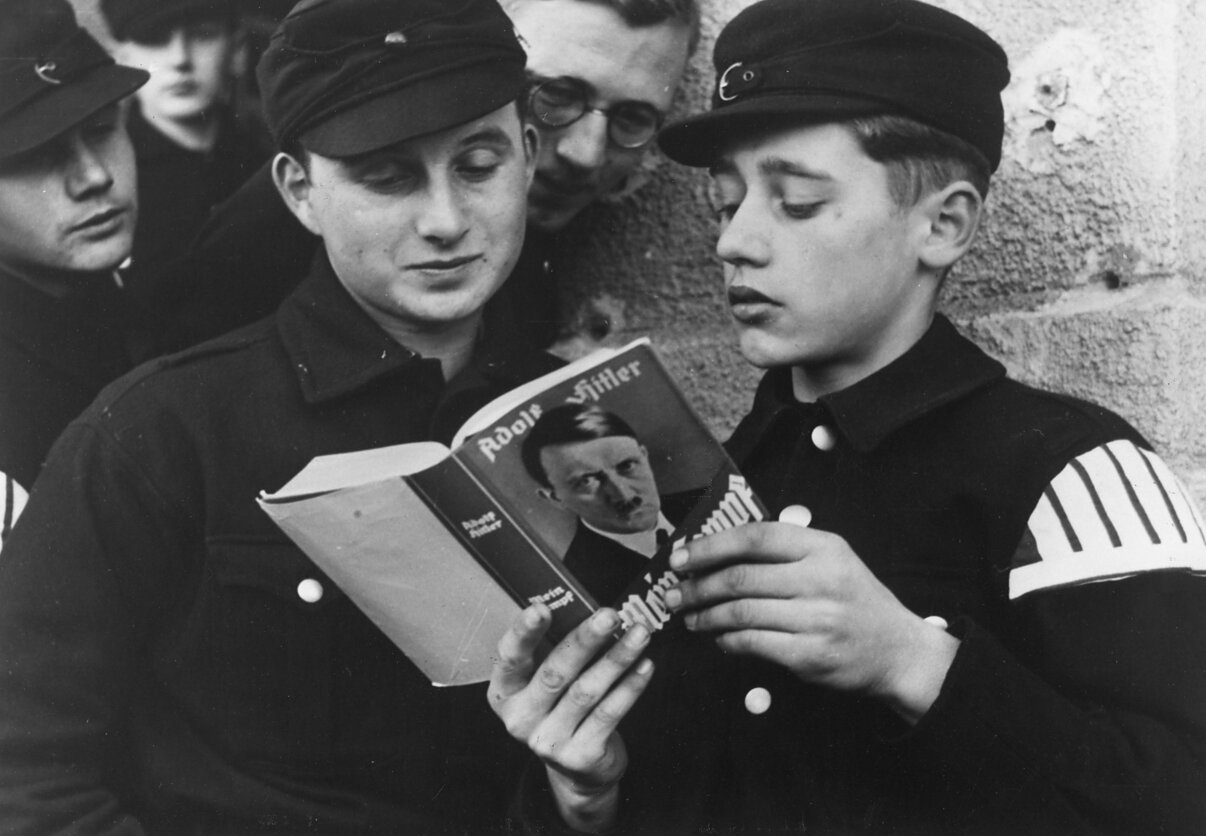
The Lithuanian publishing house Obuolys has announced that it will release the first Lithuanian edition of Adolf Hitler's Mein Kampf. In an opinion piece, Dario Martinelli, a professor of history and theory of arts at Kaunas University of Technology, argues that the book should not be published and that the publisher's arguments about understanding evil sound hollow. The article is the author's opinion, not a neutral report.
What the edition is
The edition is presented as a critical one: an 800-page hardcover based on the Polish edition prepared in 2021 by historian Eugeniusz Cezary Król, with more than 1,500 footnotes and comments. It was translated by Jolita Navickienė. The introduction was written by Arūnas Bubnys, head of the Genocide and Resistance Research Centre, who also checked the historical accuracy of the translation. The price is €129, the print run is 1,000 copies, and shipping is expected around 10 December. The publisher says the book is dedicated to the memory of the victims of the Nazi regime and plans a public launch with Professor Król.
The timing is explained by the centenary of the book's second volume. The publisher also points out that critical editions already exist in Germany and Poland and that the text is freely available online.
The author's arguments
Martinelli recalls that in 2016 the Italian daily Il Giornale distributed the book with a similar justification, which drew harsh criticism. He notes that the German edition was produced by a public research body, whereas Obuolys is a commercial house. In his view, readers often skip footnotes, while quotations will spread on social media without context, especially among young people. He considers a luxury hardcover released shortly before Christmas a seasonal commercial product, and notes that Nazi plans did not envisage Lithuanians as partners.
Reactions
The Israeli embassy expressed shock and outrage. Gercas Žakas of the Kaunas Jewish community and several Lithuanian intellectuals, including philosopher Gintautas Mažeikis and historian Algis Bitautas, have also objected. Culture Minister Lukas Alsys said this may not be the right time for such a book. According to the author, police consider that the edition falls under the exception for educational and scientific purposes in the law against Nazi symbols.