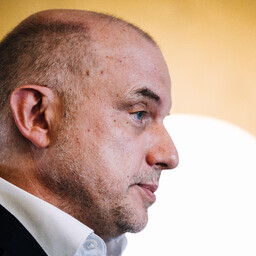
Lithuanian interior minister mixes up two Ivanovs when announcing expulsion of Russian citizen
Lithuania's interior minister Martynas Katelynas wrongly announced the expulsion of Russian citizen Valery Ivanov, when it was actually Gennady Ivanov who was removed. The minister apologised, saying he relied on incorrect identification data from the State Border Guard Service.
Lithuanian Interior Minister Martynas Katelynas wrongly announced on Facebook on 13 November that Valery Ivanov, a former leader of the pro-Soviet organisation Jedinstvo ("Unity"), had been expelled from the country. In fact, a different Russian citizen, Gennady Ivanov, was deported to Russia. He had been convicted over the events of 13 January 1991 in Vilnius, when Soviet forces moved against Lithuania's restored independence.
How the error happened
In the original post, Katelynas wrote that Ivanov had left Lithuania around midday on Friday through the Kybartai border checkpoint and, after border checks, had driven away in a Russian consul's car. The minister later deleted that post and published a new one stating that the person expelled was Gennady Ivanov. He said the expulsion was due to actions against the state.
Katelynas apologised and explained that he had relied on incorrect identification data provided by the State Border Guard Service.
The case of Gennady Ivanov
In 2019, a court of first instance convicted Gennady Ivanov of crimes against humanity and war crimes, and the verdict was upheld on appeal in 2021. He received a five-year prison sentence, which he finished serving in April this year. In total, 67 people have been convicted in the 13 January case, most of them in absentia.
On that day, special Soviet army units forcibly seized the Vilnius television tower, the Press House and other sites. Fourteen unarmed people died at the tower, and more than a thousand were injured.
The case of Valery Ivanov
Lithuania's Migration Department revoked Valery Ivanov's residence permit in November 2023, deeming him a threat to national security because he had supported the Kremlin regime and spread its propaganda about the war in Ukraine. In 2024 the department ordered his expulsion, but the decision has not been carried out because he is a defendant in a criminal case in which he was placed under a written undertaking not to leave his place of residence. Jedinstvo operated in Lithuania from 1988 to 1991.