LMT Proposes Base Station on Juglas Secondary School Roof; Parents Ask About Radiation
Mobile operator LMT has offered to place a base station on the roof of Juglas Secondary School in Riga, paying the school 390 euros a month. The lease is unsigned and design work has not begun, while a pupil's mother asks whether children's health could be at risk.
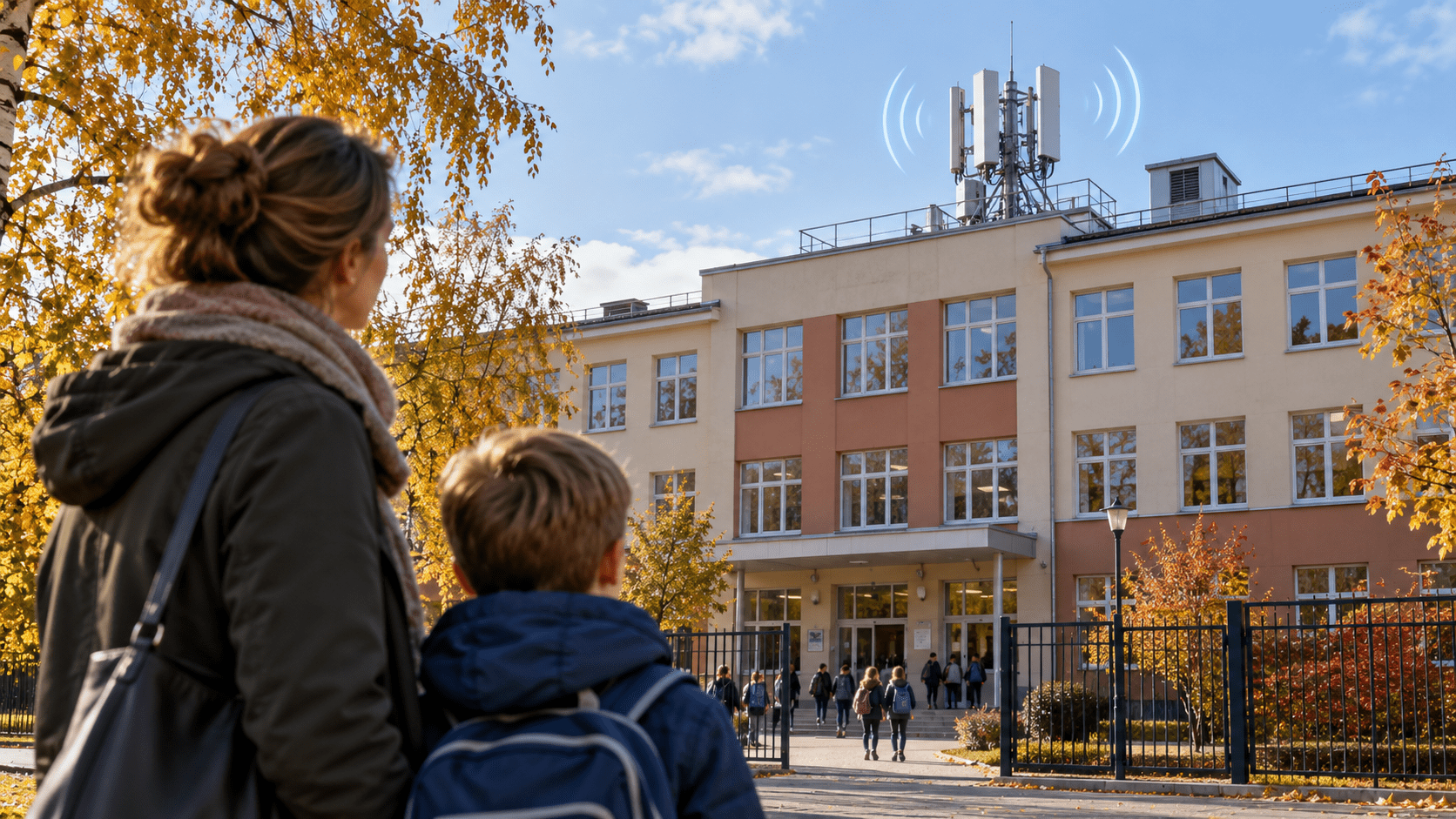
Latvijas Mobilais Telefons (LMT), one of Latvia's mobile network operators, plans to install a mobile base station on the roof of Juglas Secondary School in Riga. The school could receive 390 euros a month in rent. The principal informed the school board of the offer, and parents received the news through e-klase, the school communication platform. A pupil's mother, referred to as Maija by the newspaper, contacted Latvijas Avīze to ask whether it is safe for children to spend their days near such antennas.
Why a school roof
LMT chief technical officer Aigars Benders says the location is not chosen by building type. What matters is whether the site suits the required coverage and network capacity. Antenna height, surrounding buildings, terrain, power supply and access are also assessed. The company says it evaluated nearby structures around Juglas Secondary School and that this site was the only one meeting the requirements.
What is still unknown
The lease has not been signed and design work has not started. As a result, the number of antennas, their directions and their power have not been set. These parameters will be defined in a technical project, which must also include an electromagnetic field assessment. If equipment is attached to the existing structure, a technical survey of the building will be needed.
LMT says the rent is based on a valuation by the firm Grant Thornton Baltic, commissioned by the Property Department of Riga City Council.
Radiation limits and measurements
In Latvia, electromagnetic field limits are set by Cabinet Regulation No. 637. A station may be put into operation only after practical measurements, which are assessed by the Health Inspectorate.
According to the inspectorate, fields from base stations are on average about 100 times lower than the recommended limits. Where several operators' antennas are nearby, measured values usually reach only 0.02 to 2 percent of permitted levels. The inspectorate considers that antennas operating within legal limits cannot harm residents' health. The same requirements apply to 5G stations.
The details that matter most to parents will become clear only after the technical project and the measurements.