Latkovskis: 14th Saeima's fatal mistake was failing to read the voters
On the day Latvia's 14th Saeima holds its final sitting, commentator Ben Latkovskis argues its biggest error was empty eloquence and mishandling the Rail Baltica problems. In the 3 October election, 60% of its deputies were not re-elected.
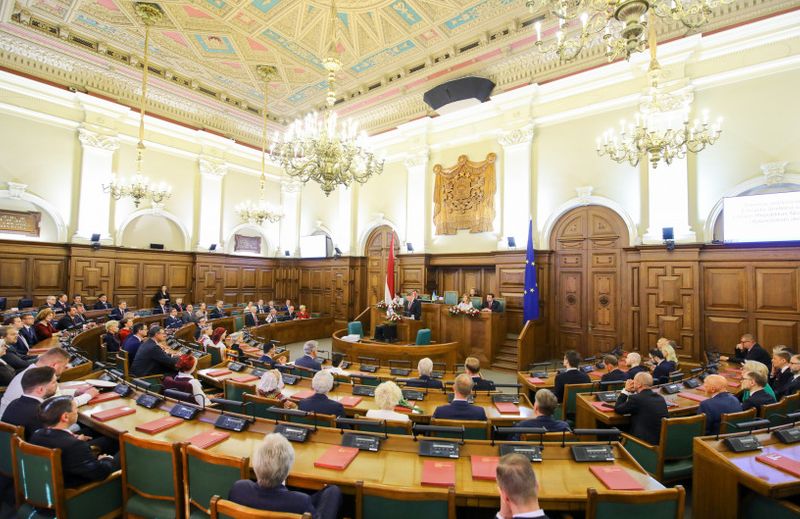
Latvia's parliament, the 14th Saeima, holds its last sitting today. A commentary published by the outlet NRA the same day, written by Bens Latkovskis, asks why voters largely replaced the deputies in the 15th Saeima election on 3 October. Some 60% of the outgoing deputies were not re-elected, while one party achieved a record-high result.
The author's explanation
Latkovskis notes that the outcome cannot be explained by the economy, since Latvia's GDP growth is the best in five years. In his view, the issue was the image of the government and parliament. He names the Rail Baltica railway project as one of the hidden hazards. Its problems were long obscured by upbeat messaging. At the decisive moment, Kaspars Briškens, whom the author calls a "champion of empty talk", was appointed transport minister in Evika Siliņa's government. Andris Kulbergs, whom the author describes as prime minister and associates with the Apvienotais saraksts (United List), was then in opposition and used concrete figures and documents to expose the problems. Briškens became the most-struck-out candidate in the 15th Saeima election, while his successor as transport minister, Atis Švinka, cleared the electoral threshold.
The author concludes that the main error was failing to notice a shift in the times: the skill of speaking "cleverly" lost out to the ability to speak "the same language as the people". He also cites the way the government changed in 2023, which gave an impression of backroom dealing, and politicians' fear of tackling the withdrawal of second-pillar pension savings. He regards tax reforms, the banks' solidarity contributions and the VAT cut as having had little effect.
The positives
Latkovskis credits the Saeima with backing defence spending of 5% of GDP, military and financial support for Ukraine, restoring compulsory military service, and moving education to Latvian-only instruction at all levels. These are the author's own views.