Lovell telescope threatened with closure as UK physics cuts spark concern
The UK government will stop funding the iconic Lovell telescope after March 2028, saving only £2.8m a year. Scientists and The Guardian argue the decision threatens fundamental research and should be reconsidered.
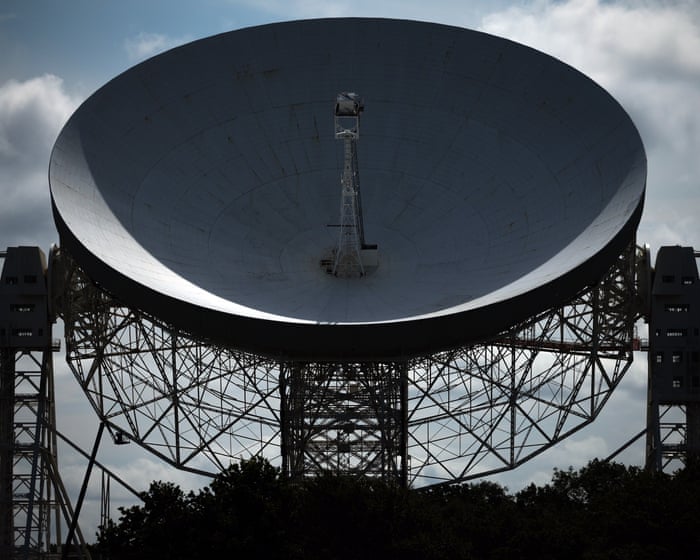
The Lovell telescope at Jodrell Bank Observatory in Cheshire, famous for tracking the Sputnik launch in 1957 and now contributing to dark matter studies, faces closure. Government funding will not continue beyond March 2028, with projected annual savings of just £2.8 million.
The move is part of a wider round of cuts by the Science and Technology Facilities Council (STFC), which distributes public money for particle, astrophysics and nuclear physics. The council aims to save about £160 million over four years, citing cost overruns. Critics, however, see a pattern in which the government is prioritising applied science over long-term fundamental research.
Programmes to be affected include international collaborations with other telescope arrays and CERN in Switzerland. Many researchers believe that blue-sky science is under particular threat, especially after UK Research and Innovation (UKRI), the STFC’s parent body, reshaped its funding model to emphasise economic growth and measurable outcomes.
The politics have also been mishandled. At a House of Lords hearing, UKRI chief Ian Chapman appeared surprised by scientists’ “hyperbolic” reaction, noting that overall physics funding has increased. Yet researchers feel slighted when existing projects and partnerships are axed, not just future plans. With the UKRI budget due to reach £10 billion by 2030, the relatively small sums involved have caused a disproportionate stir.
Political changes have added to the uncertainty. Ministers Liz Kendall and Patrick Vallance, who set funding priorities, are no longer in office, and Andy Burnham has abolished the Department for Science, Innovation and Technology. The Guardian’s editorial argues that this is a good moment to review the current approach.
Physicists warn that the UK could lose a generation of scientists in a field where it remains globally competitive. The editorial concludes that the balance between pure and commercial research needs a fresh look before lasting damage is done.