Maren Hassinger’s retrospective in Berkeley: The magic of simple gestures
The Berkeley Art Museum has opened “Maren Hassinger: Living Moving Growing,” a comprehensive retrospective of the American artist’s 50-year career, featuring her site-specific sculptures and performances that rely on knots, everyday actions, and community participation.
Simplicity as a creative foundation
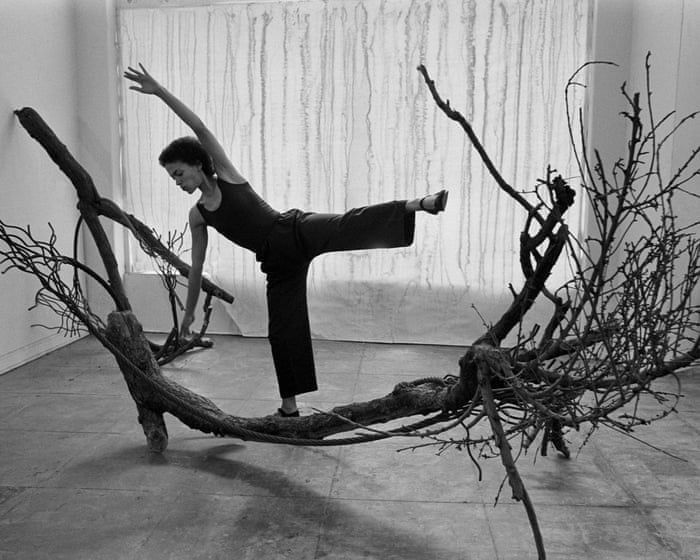
For five decades, Maren Hassinger has created art from the simplest of acts: tying a knot, twisting metal, breathing into a plastic bag, walking through a room. Now, the Berkeley Art Museum and Pacific Film Archive (BAMPFA) presents “Maren Hassinger: Living Moving Growing,” a retrospective that recreates her most celebrated works, documents performances, and invites audiences to take part.
“There’s a kind of magic to her work,” said BAMPFA senior curator Anthony Graham. “The way she’s able to transform materials and really change the space that those things inhabit, to make us see them in a new way.”
The knot as a recurring motif
Knots appear everywhere in the exhibition. “Untitled Rope” consists of four thick industrial ropes loosely tied into macrame knots. “Sign of the Times” features countless strips of The New York Times twisted and tied into massive ropes hanging from the wall. Also on view are huge wire ropes, pink plastic bags tied shut to hold breath, and a video of Hassinger’s hands tying knots in “Birthright.”
Graham noted that knots are both quotidian and versatile – used in shoelaces, macrame, or on ships. “In her work, there are these repetitive gestures, but approached with a sculptural sensibility that shifts scale,” he said.
Community and care
In “Love (Pyramid),” Hassinger fills neon pink shopping bags with her breath and a tiny love note, pinning them to the wall. The piece requires constant care – deflated bags are refilled and re-pinned, involving museum staff. “It’s the ability to care for things and give them new lives,” Graham said.
“Sign of the Times” is built with the community through monthly workshops. “On opening day, the theater was full of people talking,” Graham recalled. “It broke down the hierarchy – everyone was in the world together. That is the radical act: to create a caring world.”
Identity and recognition
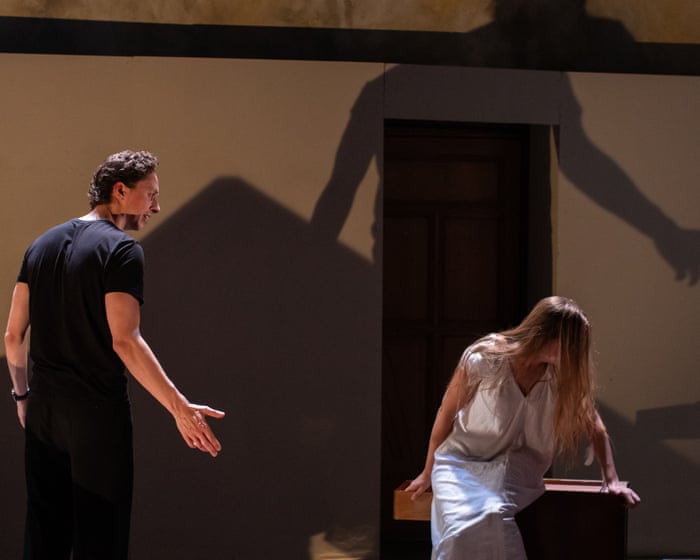
Video works “Birthright” and “Daily Mask” address race and identity. The former traces her family history; the latter shows her applying blackface. Hassinger, who emerged in the 1970s as a Black female artist, faced challenges finding her place. She found community with other Black avant-garde artists in Los Angeles after graduating from UCLA in 1973.
The 2011 exhibition “Now Dig This!” at the Hammer Museum brought her work to wider attention. She later became director of the Reinhardt School of Sculpture at the Maryland Institute College of Art.
Graham hopes the retrospective encourages visitors to slow down. “I hope the show helps people pay closer attention to the world around them,” he said. “The power of these very simple gestures, when we do them together, we can really make a change.” The exhibition runs through November 29 at BAMPFA.