Meta launches Muse AI agent — but will users trust it with their data?
Meta has introduced Muse, a new personal AI agent for U.S. consumers that can handle everyday tasks by connecting to their apps and services. The move raises fresh questions about whether users are willing to trust the company with even more personal information, given its troubled privacy record.

Less than two weeks after Meta agreed to an $18 billion multistate settlement over harm caused by social media, the company has unveiled its latest consumer AI product, one that may demand a greater degree of trust than its previous services. On Tuesday, Meta presented Muse, a personal AI agent for users in the U.S. designed to assist with tasks and projects in daily life.
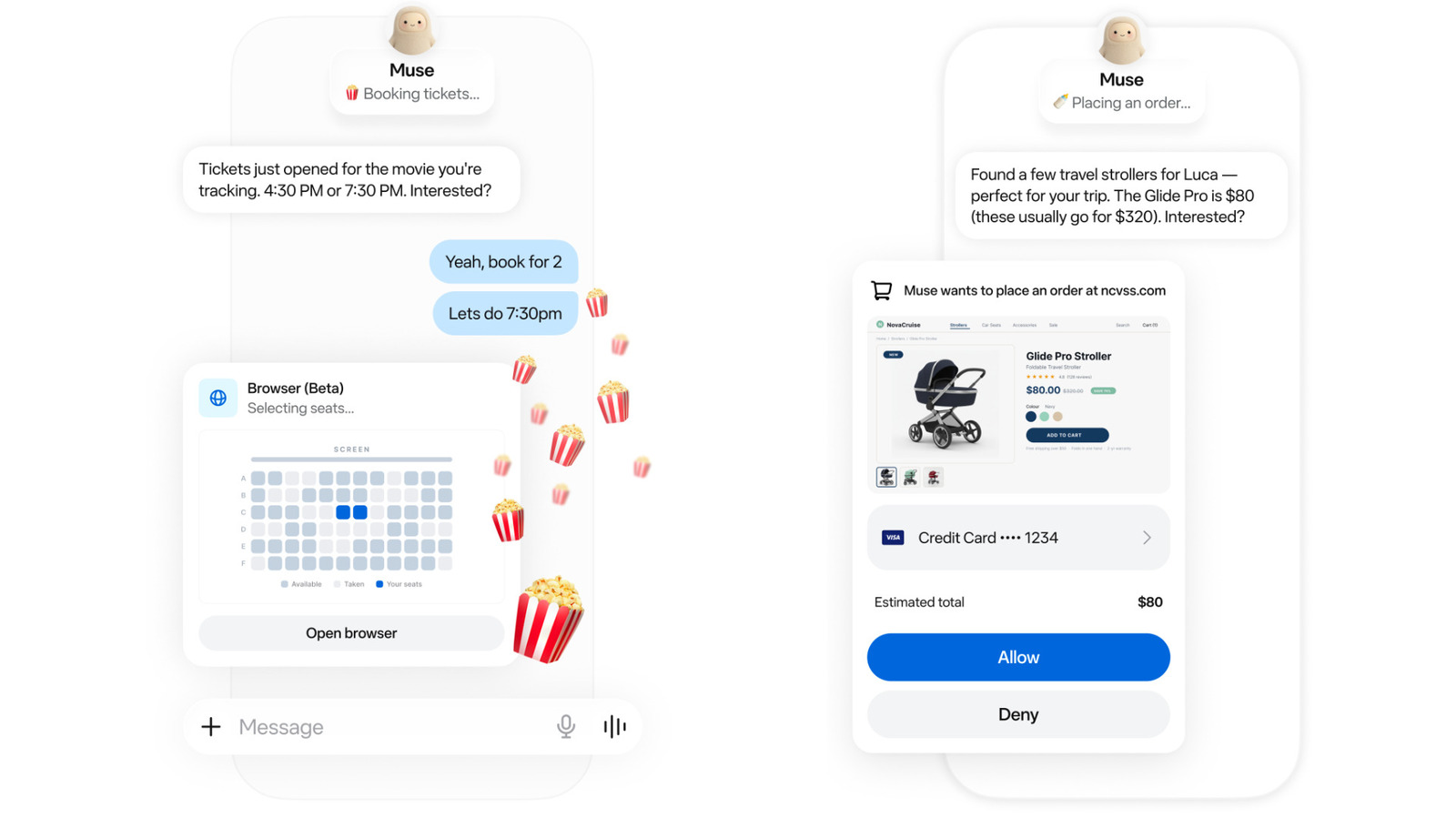
Muse works by linking to the apps and services people already use, such as email, calendars, payment systems, health and fitness platforms, smart home tools, shopping, music and events. The company describes this as a bet on what comes after the ChatGPT era — instead of simply answering questions, AI is meant to take action.
According to Meta, the agent can send emails, book travel, negotiate lower bills, fill out forms, plan events, turn recipe videos into grocery lists, send party invitations and make purchases through Stripe's Link checkout. Users can choose which services to connect, one at a time. The system is powered by Meta's Muse Spark model and includes built-in connectors; if an app has a public API, Muse can use user-provided credentials, and if there is no API, it can operate through a browser.
Muse will initially be available at muse.ai, on iOS and Android, and through WhatsApp chats. Meta says it will later arrive on its AI glasses. The service launches with a free tier, but requires a payment card. Paid subscriptions cost $20 per month for Power and $100 per month for Maximum, with a usage meter that warns users before they may need to pay.
Meta says Muse runs in a dedicated, secure virtual machine with its own browser, called Muse Secure VM, and that a separate Sentinel agent is kept isolated from Muse at the system level. The company claims Muse cannot see passwords or payment details and does not share conversations with its advertising systems. These assurances are explained in a technical post but will need independent scrutiny.
Given Meta's history, skepticism may be justified. The company has faced several FTC settlements, including a $5 billion penalty in 2019, and was charged with violating a privacy order in 2023. It also discovered in 2019 that some user passwords were stored in readable format, and the Cambridge Analytica scandal remains a reference point. Meta has repeatedly testified before Congress and has faced lawsuits over minors' safety, including a $942 million judgment in a New Mexico case and an $18 billion settlement with 29 states.
To build trust, Meta has made Muse customizable — users can name the agent, choose an avatar and adjust settings. Whether that personal connection and the tool's usefulness will persuade consumers to hand over more personal data remains an open question.