Martha Lillard, last known US polio survivor using iron lung, dies aged 78
Martha Lillard, the last known American living with polio and dependent on an iron lung, has died at 78 in Oklahoma.
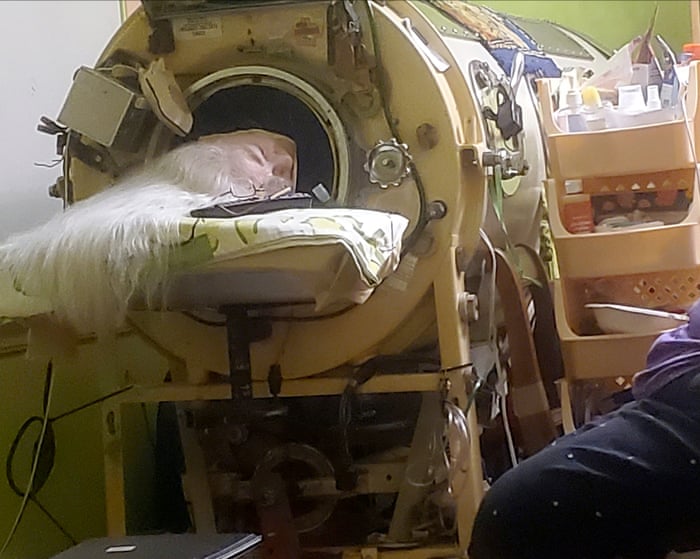
The last known person in the United States living with polio and relying on an iron lung has died at the age of 78. Martha Lillard, who contracted polio at age five and spent most of her life dependent on an iron lung machine that helped her breathe, died on June 26 in Oklahoma, according to an online obituary.
Lillard slept inside the metal cylinder device that enclosed her body while changing air pressure forced air in and out of her lungs. Despite that, she attended grade school for two hours daily before completing the rest of her education through tutoring.
“They told her she wasn’t supposed to live past 20 years old,” Cindy McVey, Lillard’s younger sister, told the Associated Press on Friday. “She had the enthusiasm and the drive to continue living and make the best of her life.”
McVey said she believes the effects of a long-term case of Covid-19 contributed to her sister’s death. According to McVey, Lillard’s death certificate lists chronic pulmonary failure and post-polio syndrome as her causes of death.
Lillard’s family made it possible for her to travel, taking road trips to Missouri in a custom trailer after her father contacted hotels to ensure their doors were wide enough to accommodate his daughter’s iron lung. Lillard was also able to drive for a period of time.
Lillard’s death comes two years after the death of Paul Alexander, the Texas man who gained international attention while spending much of his life in an iron lung after contracting polio at age six. Paralyzed from the neck down by the disease, Alexander became an inspirational figure, earning a law degree, writing a memoir and creating paintings using a brush held in his mouth. Alexander also died aged 78 after being recognized by Guinness World Records as the organization’s “longest iron lung patient.”
Before vaccines became widely available, polio was among the most feared diseases in the US, with yearly outbreaks leaving thousands of people paralyzed, most of them children. Iron lungs helped save thousands of lives during those epidemics, although they were intended only for short-term use. As vaccination campaigns expanded in the late 1950s, the machines largely disappeared and were replaced by other breathing devices inserted directly into the throat. The federal Centers for Disease Control and Prevention says widespread vaccination reduced annual US polio cases to fewer than 100 in the 1960s and fewer than 10 in the 1970s. In 1979, polio was declared eliminated in the US.