Father and son run winter milking dairy farm in Co. Monaghan
Neville and Lee Irwin milk 140 cows in a split-calving system in Co. Monaghan, Ireland, supplying Lakeland Dairies. Herd performance has climbed quickly since Lee returned to the farm full-time.
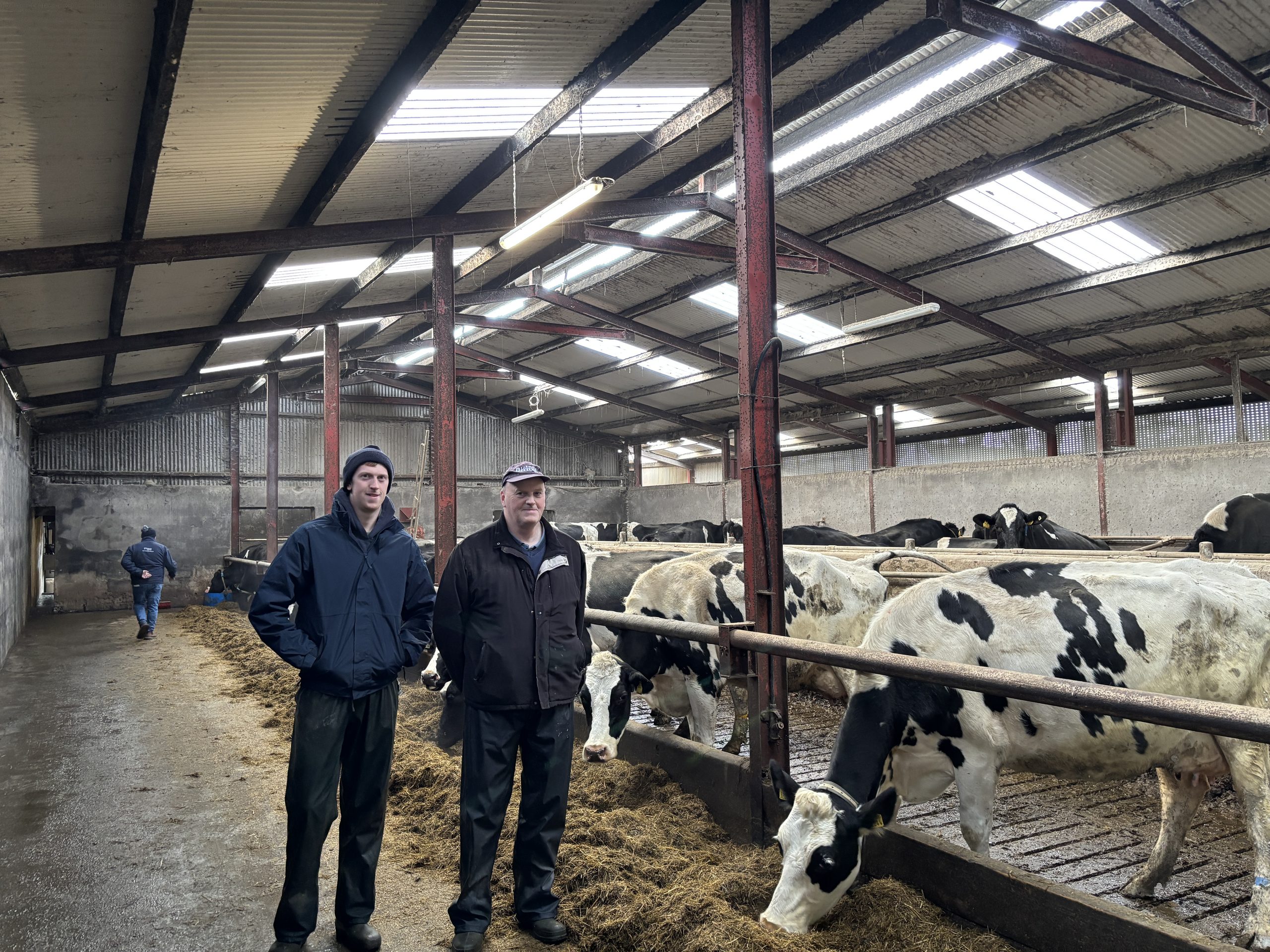
On the Ballybay to Monaghan road in Co. Monaghan, in the north of Ireland, father and son Neville and Lee Irwin milk 140 cows in a split-calving system, with part of the herd calving in spring and part in autumn. They supply their milk to the dairy co-op Lakeland Dairies. Their farm drew interest from the sector recently, when it hosted a group of farmers at a winter milk event run under a joint programme of Lakeland Dairies and Teagasc, Ireland's agriculture advisory and research body.
Performance
Lee returned to the farm full-time in 2023 after studying at Ballyhaise Agricultural College in Co. Cavan. He brought a strong interest in breeding and genetics, and herd performance has risen rapidly since. In 2025 the Irwins supplied more than 600kg of milk solids (MS) per cow, even though all calves were fed whole milk. The herd currently averages 18 litres a day at 5.26% fat and 3.96% protein, equal to 1.70kg of MS daily on 5kg of concentrates. In terms of milk solids per cow, the farm ranks in the top 5% of suppliers.
Winter milking
Calving is split 60/40 in favour of spring, so just under 60 calves arrive in autumn. The six-week calving rate is 55% and the calving interval is 375 days. Until Lee came home, the farm used 20% artificial insemination (AI) and 80% bulls; the ratio is now reversed, so the Irwins expect the figures to keep improving. The top half of the herd receives sexed semen from carefully chosen sires at first service, with heat detection collars helping.
Winter milkers eat silage and brewers grain, plus zero-grazed grass early and late in the season. The cows are due back at grass in the first week of March. The land is heavily fragmented and split by the main road, which complicates grazing, so the family relies heavily on zero-grazing. Four years ago they leased a 45-acre out-block that already had a parlour. From March to October Lee takes 50-60 freshly calved cows there, so the farm runs as two separate operations in summer. No cows are milked on the out-block in winter, so father and son work together then, although milking continues 365 days a year. Without pit silage, they cut bales once in early May and bale surplus from heavy paddocks.