NASA Rover Finds Complex Carbon on Mars, Adding to Clues of Ancient Life
NASA’s Perseverance rover has detected macromolecular carbon in Martian mudstones at the Bright Angel outcrop, where previous features hinted at fossilized microbes. While not proof of life, the discovery suggests organic matter was widespread on early Mars.
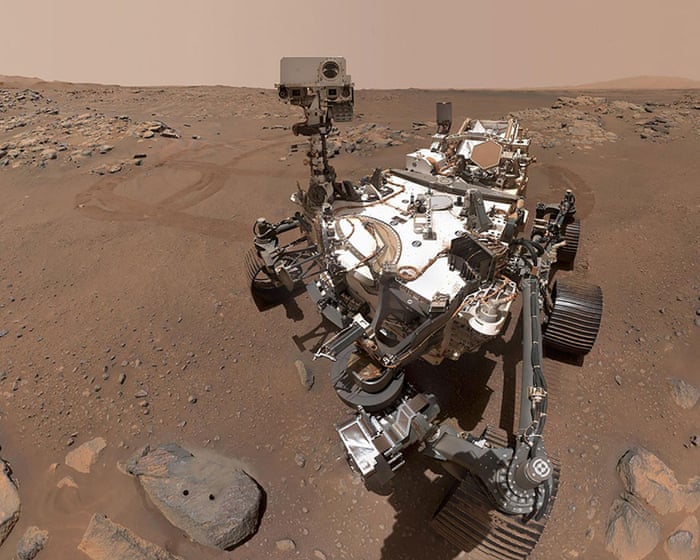
NASA’s Perseverance rover has identified complex carbon molecules in Martian rocks that were already under scrutiny for potential signs of ancient microbial life. Using its Sherloc instrument, the rover detected macromolecular carbon (MMC) in mudstones from the Bright Angel outcrop along Neretva Vallis, an ancient river channel that once flowed into Jezero crater billions of years ago.
MMC can originate from biological sources, such as fossilized organic matter in microbial mats or coal, as noted by Dr. Ashley Murphy of the Planetary Science Institute in Arizona. However, it can also form through geological processes like water-rock interactions or be delivered by meteorites, so the detection does not confirm past life.
The Bright Angel rocks first gained attention in 2024 when Perseverance observed surface spots and nodules resembling features produced by fossilized microbes on Earth. Sean Duffy, former acting head of NASA, called them “the clearest sign of life” found on Mars at that time.
In the latest study, published in Science Advances, Murphy and colleagues describe how they used a UV laser on Sherloc to analyze the Cheyava Falls mudstone, revealing MMC on its surface. This suggests the organic material was recently exposed or resistant to radiation and oxidation that normally destroy organics on Mars.
With this finding, NASA rovers have now discovered organic-bearing mudstones more than 2,000 miles apart on Mars, as Curiosity previously found similar organics in Gale crater. The authors state this indicates that Martian habitability and organic availability were widespread billions of years ago.
Professor John Bridges of the University of Leicester, not involved in the study, called this “more tantalizing information” about Jezero’s Bright Angel outcrop. He noted that the environment was habitable for primitive life, with both textural hints and carbon building blocks.
Current Mars rovers are not designed to determine if the carbon came from life or non-biological processes. Returning samples to Earth is necessary for definitive tests. NASA’s original sample return mission was canceled in January, but a revised mission is planned for the 2030s. China aims to return its own Martian samples by 2031.