Several new education rules take effect with new school year
Latvia's new school year brings multiple regulatory changes, from assessment rules and foreign language requirements to a teacher pay model and support for students with special needs. Some decisions, including exam thresholds, still await government approval.
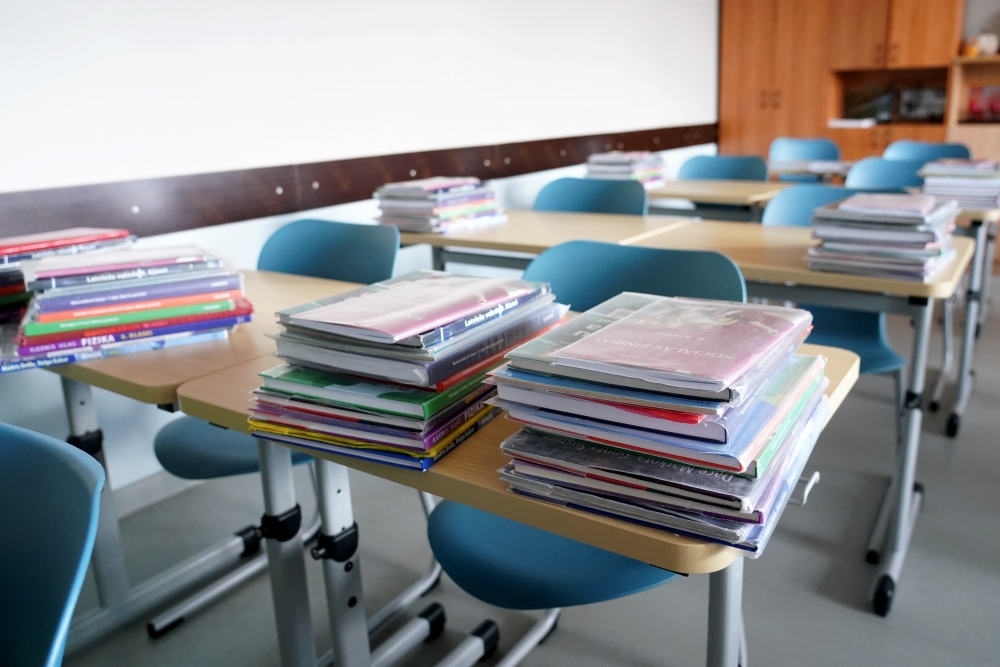
With the start of the new school year, a range of new rules take effect across Latvia's education system, covering student assessment, curriculum, teacher pay, organization of the learning process and document handling. Changes are also planned in higher education.
Assessment and exams
For the first time, 9th-grade students will sit a separate state exam in natural sciences, replacing the previous interdisciplinary test format. At the same time, the Ministry of Education and Science (IZM) is pushing to remove the requirement that students score at least 20% overall to have an exam result counted, though a final decision is still pending; the matter was on the agenda of the September 1 government session. Schools will also be required to give students at least one chance during the year to improve a grade in each subject, rather than only through a comprehensive test at year's end.
Foreign languages
A transition is being completed under which upper-secondary students and all 5th graders must study two foreign languages — one official EU language and another official language of an EU or EEA state. This marks the conclusion of the phased removal of Russian as a second foreign language, though students who already began studying it may finish.
Other changes
Schools gain more flexibility to combine classes for certain subjects, including physical education and Latvian language instruction for asylum-seeking minors. Civil defense education becomes mandatory for part-time and distance-learning students. Students with a doctor's recommendation can have physical education requirements adjusted without being exempted from the subject altogether.
The new teacher salary financing model, "Programma skolā," will be applied more broadly, tying state funding to class sizes, with exceptions for certain municipal schools. Limits on the share of remote and online instruction were also set by grade level, along with a new system for tracking information on students with special needs in the State Education Information System, reducing paperwork for parents.