From a Single Competition to a Systemic Problem: What Ails the Latvian Civil Service?
The debate over amendments to the Civil Service Law reveals deeper issues—closed rotation among senior officials, politicization, and erosion of public trust.
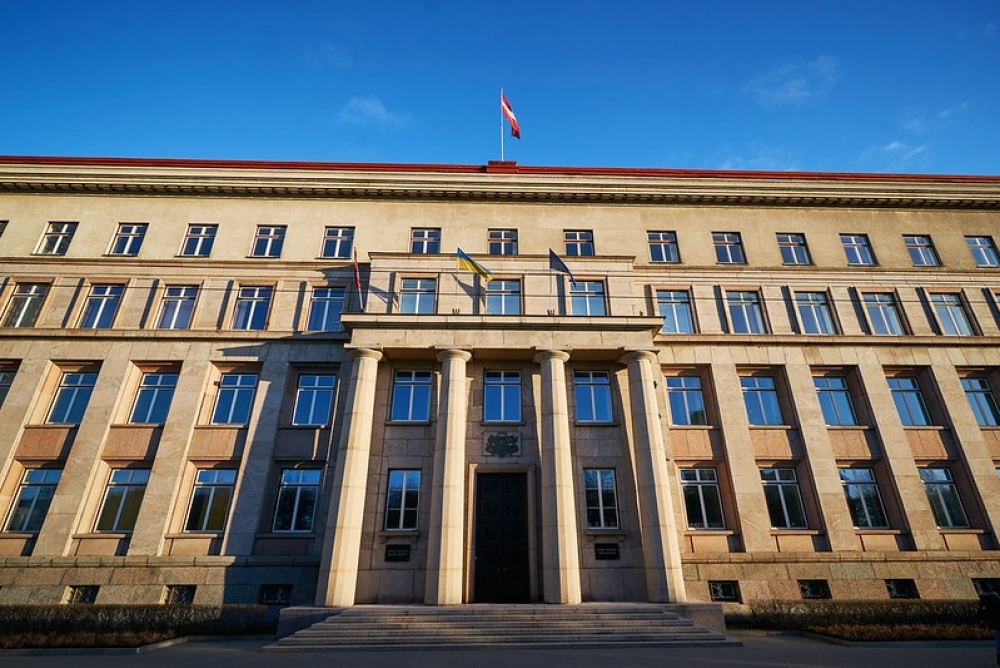
The current debate over amendments to the Latvian Civil Service Law and a specific competition for the post of Director of the State Chancellery reflects a much broader problem that has persisted in Latvia's public administration for at least fifteen years. Attention is focused on one provision: whether the Prime Minister can use the transfer mechanism to appoint the new Director if the competition results are not approved. However, this is only the tip of the iceberg.
With the amendments that came into force on July 1, 2026, the requirement for a mandatory open competition when a head of an institution is released by mutual agreement was removed. This allows for faster appointments but weakens transparency.
Closed Senior Civil Service
Although formally the Latvian civil service model is based on professionalism and political neutrality, in practice, since 2014, approximately half of the 91 appointments of senior officials have been made through transfers or rotations, not open competitions. For instance, several state secretaries—in the Ministries of Foreign Affairs, Interior, Finance, Welfare, and Justice—acceded to their posts via this route.
The career trajectory of Raivis Kronbergs is illustrative: from State Secretary of the Ministry of Justice to State Secretary of the Ministry of Agriculture, and then to Director of the State Chancellery, all via transfer mechanisms, not open competitions. Such practices create a closed cadre rotation system that reduces external competition and increases politicization risks.
Rotation – Tool or Risk?
Rotation and transfer are not inherently bad—they can facilitate knowledge transfer. However, in Latvia, they are often perceived as risks or punishments rather than development opportunities. Studies, such as the 2026 LaSER report, show that rotation occurs irregularly and without systematic planning.
Public trust in the government is low—OECD data from 2023 indicate that only 25–29% of Latvian residents reported high or moderately high trust. This distrust is not due to a single incident but stems from repeated experience that after scandals and criticized decisions, the system lacks a clear accountability mechanism.
Need for Systemic Reform
The article emphasizes that the problem is not just one provision or one competition. A broader discussion is needed on how to make senior civil service selection more transparent, based on meritocratic principles. The authors argue that the rotation system must be transformed into a clear, professionally justified mechanism, not a non-transparent shortcut to influential positions.