Mysterious object in space: could it be a Soviet probe missing for 40 years?
An 11-metre object near Earth, 1998 KY26, shows unusual acceleration, and Harvard astrophysicist Avi Loeb suggests it could be the Soviet probe Phobos 1, lost in 1988. Other researchers say it is most likely a natural asteroid.
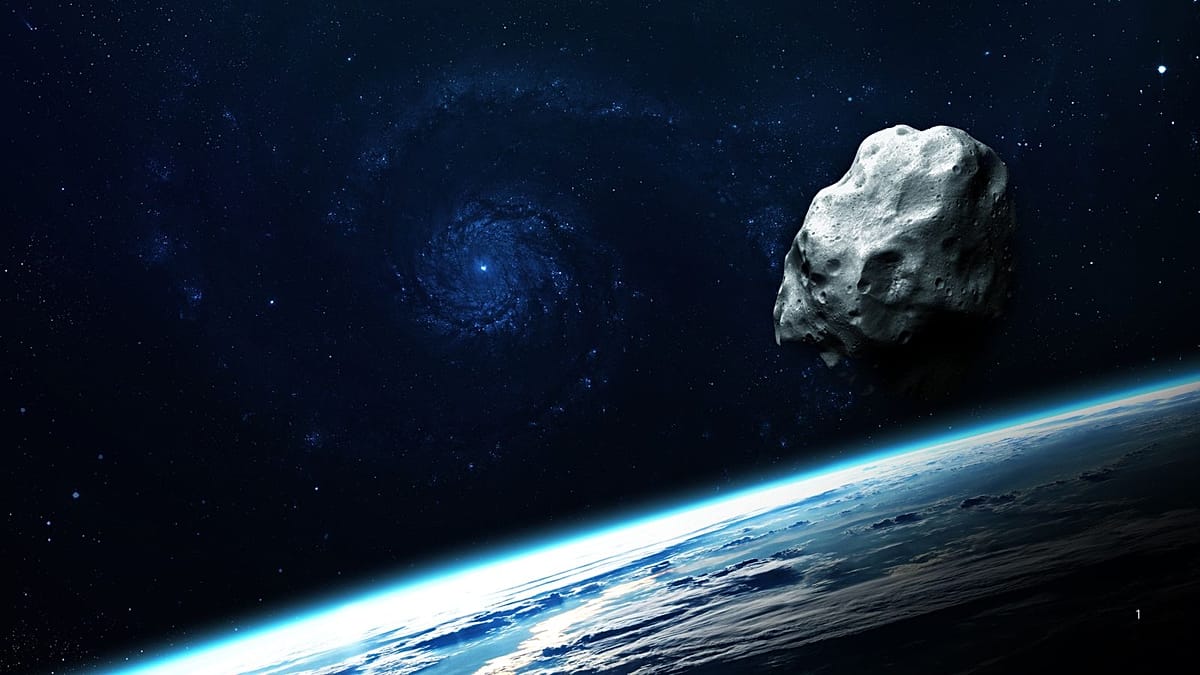
An object designated 1998 KY26, about 11 metres wide, is moving through the Solar System near Earth and showing what is known as non-gravitational acceleration: its path cannot be fully explained by the pull of the Sun or Earth. The behaviour has prompted speculation that it might be a spacecraft of the former Soviet Union that disappeared nearly 40 years ago. NASA, the US space agency, is monitoring the object. Its chief, Jared Isaacman, said on Thursday there was no reason for concern, that the object poses no known threat to Earth and that there is no evidence of a possible collision.
Has Phobos 1 been found?
Harvard astrophysicist Avi Loeb and two colleagues, Adam Hibberd and Adam Crowl, believe KY26 could be Phobos 1, an unmanned Soviet spacecraft launched on 7 July 1988. The probe lost contact with Earth on its way to Mars.
The researchers built a simplified model of Phobos 1 and compared the way it would reflect sunlight while rotating with observations of KY26. The model closely matched eight separate sets of observations. KY26 reflects almost 52% of the sunlight striking it and completes a full rotation every 5.35 minutes. Loeb and his colleagues say these traits are consistent with an artificial object.
Alternative explanations
A 2023 study proposed that KY26 is a "dark comet", with trapped water turning to gas and producing thrust. However, astronomers have not detected the gas cloud or tail normally associated with comets.
Another study concluded that 1998 KY26 is most likely a dehydrated asteroid. In that case water ice is unlikely to explain the acceleration, because temperatures are too high for enough ice to survive for long. Solar radiation pressure on the object's surface could also slightly change its trajectory. Other observations point to a natural, rocky asteroid rather than an old spacecraft; a 2025 study in the journal Nature Communications put its diameter at just 11 metres.
A Japanese probe may settle it
Japan's Hayabusa2 spacecraft is due to reach 1998 KY26 in July 2031 and study it at close range. It will be the first mission to directly investigate an asteroid this small. Images and measurements from the encounter could show whether the object is a natural rocky body or possibly something artificial. Until then, Loeb's idea remains an unproven theory. The astrophysicist has joked that Hayabusa2's cameras might find a label reading "Made in the U.S.S.R." instead of a block of ice.