Parker Solar Probe completes 28th flyby, solar energy overtakes coal
NASA's Parker Solar Probe made its 28th close pass around the sun, matching speed and distance records. In May 2026, solar power surpassed coal in US electricity generation for the first time.
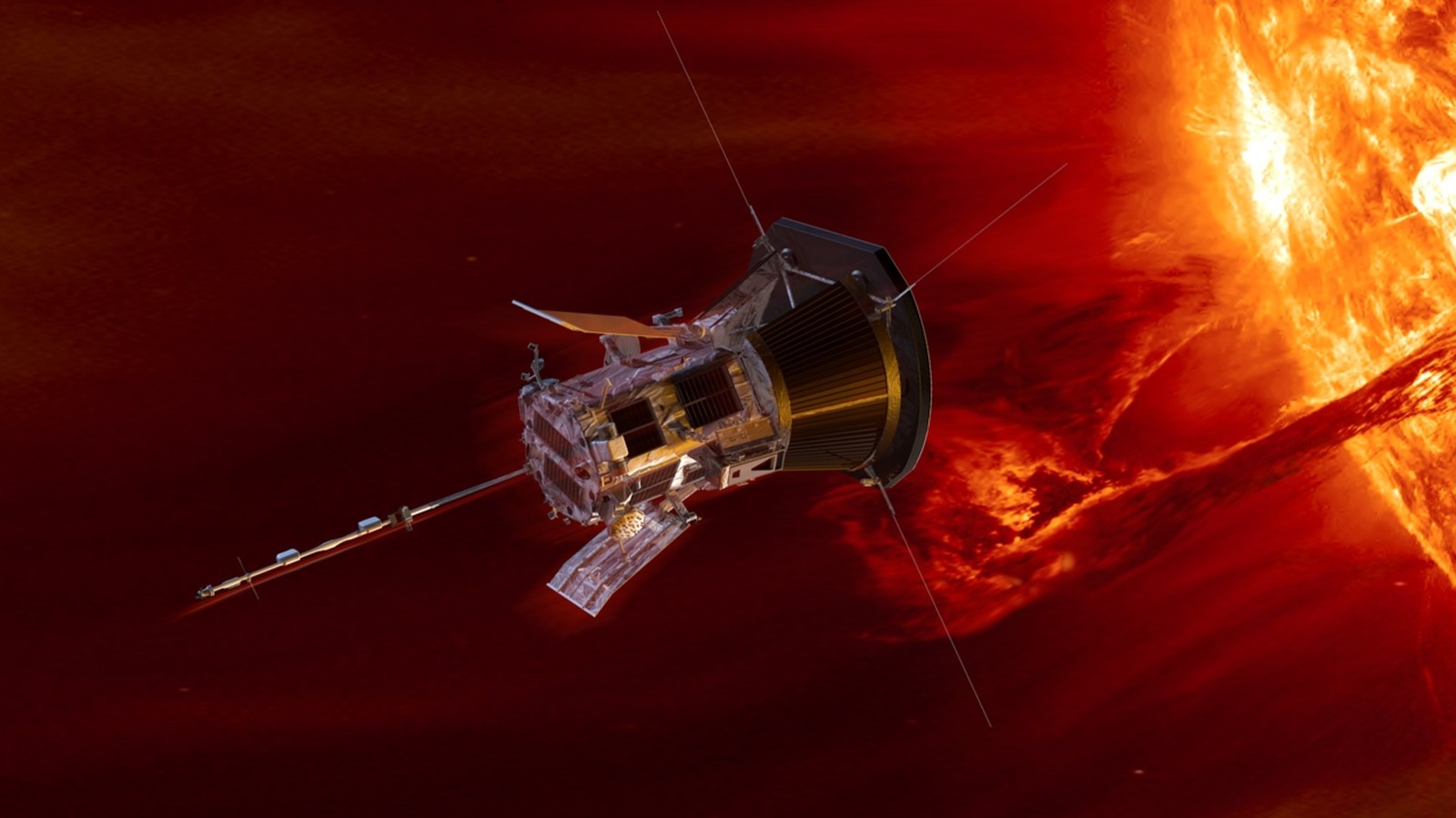
Parker Solar Probe's 28th flyby
NASA's Parker Solar Probe made another close pass around the sun this week, coming within 3.8 million miles of the surface and reaching a speed of 430,000 mph. This marked its 28th flyby, matching the records first set in December 2024; the probe has achieved those numbers five times since. It began its approach on June 3 and transmitted a beacon tone on Thursday indicating all is well.
Launched in 2018, the Parker Solar Probe made its first close approach that fall, coming within 15 million miles of the sun's surface at a maximum speed of 213,200 mph. Despite extreme conditions—the heat shield reaches an estimated 1,700 degrees Fahrenheit—the probe continues to function well. The temperature below the shield remains stable, suggesting the shield is not degrading. The probe studies solar wind and activity, arriving near solar minimum and witnessing solar maximum, confirmed in 2024. Solar activity will soon begin to decline.
Solar overtakes coal in the US
According to a report from energy think tank Ember, May 2026 was the first month on record that solar generated more electricity than coal in the United States. Solar supplied 12.8% of US electricity, while coal fell to 12.2%. Solar output reached a record 45.5 TWh, compared to coal's 43.4 TWh, an 11% drop year-on-year. Coal's share in the US energy mix has nearly halved over five years, from 19.7% in May 2021 to 12.2% in May 2026, while solar's share more than doubled from 5.4% to 12.8%. Solar still lags behind gas and nuclear, but renewables collectively generated more electricity than gas for the first time in March.
Aurora australis from space
This week, astronaut Jessica Meir aboard the International Space Station shared a stunning timelapse video of the aurora australis (southern lights), captured from a Dragon spacecraft docked to the ISS. "As opposed to the previous aurora I've seen, this one danced and snaked its way directly below us, putting on quite a show," Meir wrote. NOAA's National Space Weather Prediction Center issued G2 and G3 geomagnetic storm watches last week, indicating auroras might be visible in more regions than usual—across Canada, the northern US, Australia, and New Zealand.