Ghost lineage from Africa left hidden marks in modern human DNA
A genomic analysis of about 500 modern humans has uncovered traces of an unknown hominin population that interbred with our ancestors before the migration out of Africa. The DNA, dubbed a ghost lineage, appears in all modern populations and adds a new chapter to the known interbreeding with Neanderthals and Denisovans.
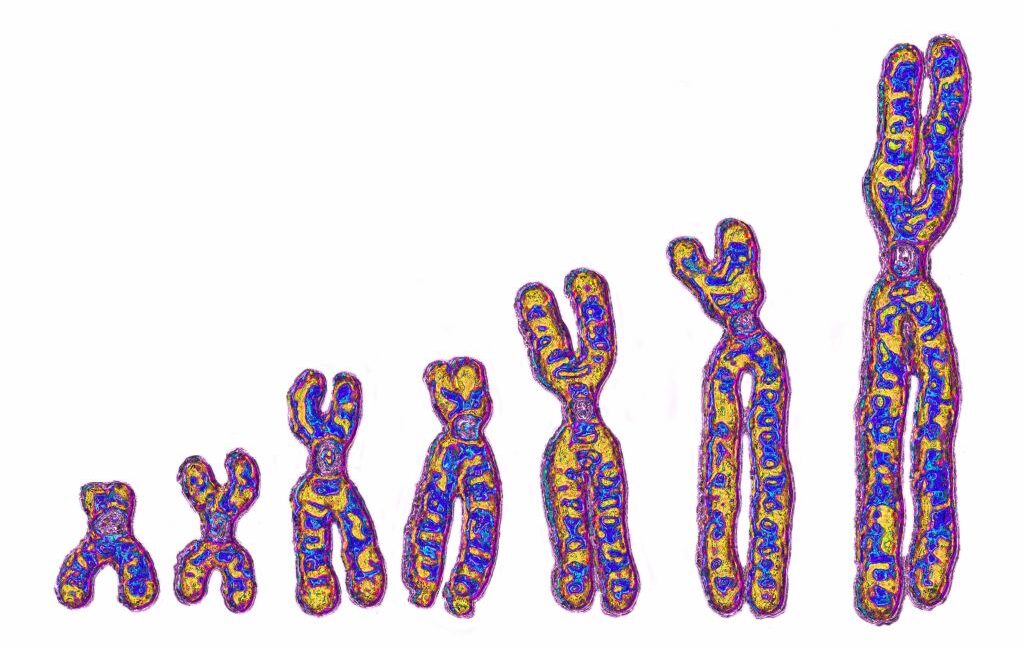
Genetic evidence has long shown that modern humans interbred with Neanderthals and Denisovans, but scattered signals have hinted at other, less understood ancestors. These hints were hard to confirm because no reference genome exists for the source population. A team largely based at Berkeley has now used a new computational approach to systematically search for such "ghost" DNA.
The method relies on ancestral recombination graphs, which estimate how each position in a genome evolved and recombined over generations. Using a tool they named TRACE, the researchers looked for sequences with two signatures: they appear ancient in their underlying ancestry, yet show little recombination, meaning they were reintroduced into the modern human lineage relatively recently. Testing on known Neanderthal and Denisovan DNA gave a false discovery rate below 0.25 percent and accuracy above 90 percent.
When applied to around 500 modern human genomes, TRACE recovered the expected Neanderthal and Denisovan segments but also found a previously unidentified lineage. This ghost lineage accounts for about 0.5 to 1.1 percent of present-day human genomes. Together, those segments represent roughly 1.5 billion bases—about half the human genome. They are present in all modern populations, indicating interbreeding occurred before modern humans dispersed from Africa.
African populations retain more diverse and distinct ghost-lineage segments, reflecting the loss of genetic diversity during the expansion into Eurasia. The researchers identified about 100 genomic regions in non-Africans that completely lack this DNA. By comparing the sequences, they estimate the ghost lineage shared a common ancestor with modern humans over 800,000 years ago, about the same time as the split from Neanderthal and Denisovan ancestors.
The ghost segments are shorter on average than Neanderthal or Denisovan DNA, which suggests they entered the human genome earlier. Notably, they appear in areas called "deserts" that normally lack Neanderthal and Denisovan DNA. That suggests the absence of those archaic lineages in these regions is due to something specific to them, rather than a general intolerance of foreign DNA.
The study also explored a "super-archaic" lineage that Denisovans interbred with long ago. This lineage apparently diverged from modern humans roughly 1.8 million years ago, possibly from Homo erectus or another early human ancestor. The team detected this ancient DNA in Oceanian genomes, where it makes up around 0.3 percent of the Denisovan-derived DNA.
Archaic DNA from these ghosts tends to be rarer near genes, and genes in those neighborhoods are often involved in metabolism and immune function, though whether these variants are advantageous remains unknown. The researchers cannot say what the ghost lineage looked like, but ancient DNA or archaeological discoveries may eventually provide more answers.
/nginx/o/2026/09/29/17944469t1h1037.jpg)
