Before Winter: How to Prepare a Tractor Battery for the Cold
Polish farming portal Farmer.pl offers advice on checking and preserving a tractor battery before cold weather. Before buying a new battery, it recommends checking voltage, connections and the charging system.
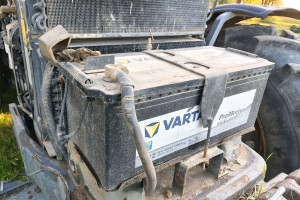
Polish farming portal Farmer.pl published guidance on 27 October for farmers on preparing a tractor battery for winter. Cold reduces battery capacity while the engine needs more energy to start, so a tractor that ran fine in summer may fail to start after a few chilly nights.
Why the battery drains
A common mistake is to assume that a regularly used tractor must have a charged battery. Every engine start consumes a lot of energy that the alternator does not always manage to replace. This particularly affects machines used for short jobs, such as moving bales or clearing snow from a farmyard. In older tractors with dynamos, charging at low revs may be insufficient.
Checking voltage
Charge level can be measured as voltage with the engine off, ideally after several hours of standing. For a typical 12 V lead-acid battery, the approximate values are:
- 12.7–12.8 V – fully charged;
- about 12.5 V – consider topping up the charge;
- about 12.2 V – significantly discharged;
- below 12 V – charging and a condition check are needed.
With the engine running, traditional systems should usually show about 13.8–14.7 V. A value that is too low may point to problems with the alternator, voltage regulator or cables, while one that is too high risks overcharging. For serviceable batteries, electrolyte level and density should also be checked; when fully charged at 25°C the density is usually around 1.26–1.28 g/cm³. Only distilled or demineralised water should be added, never acid.
Other causes of hard starting
Starting can also be hampered by a worn starter motor, corroded or loose terminals and damaged earth connections. A white or greenish deposit on terminals often only requires cleaning and coating with acid-free technical petroleum jelly. In cold weather engine oil becomes more viscous; 5W-40 keeps better properties at low temperatures than 15W-40, but the engine maker's recommendations should be followed.
Winter storage
Combine harvesters, sprayers and some tractors can stand idle for months. Before that, the battery should be fully charged; it can also be removed and kept somewhere dry and cool. Every month or two, check the voltage and connect a charger if needed.
Can frost destroy a battery?
At around -18°C, available capacity can fall to as little as half of that at room temperature. A discharged battery freezes far more easily than a fully charged one. If the electrolyte has frozen, the battery must not be charged or used for starting.