Polish Defence Minister: Europe Must Shift Arms Production to a "War Footing"
Poland's Defence Minister Władysław Kosiniak-Kamysz told the Warsaw Security Forum that Europe must move its arms production to a "war footing", as Russia already has. He also called the Irish presidency's EU budget proposal unacceptable to Poland.
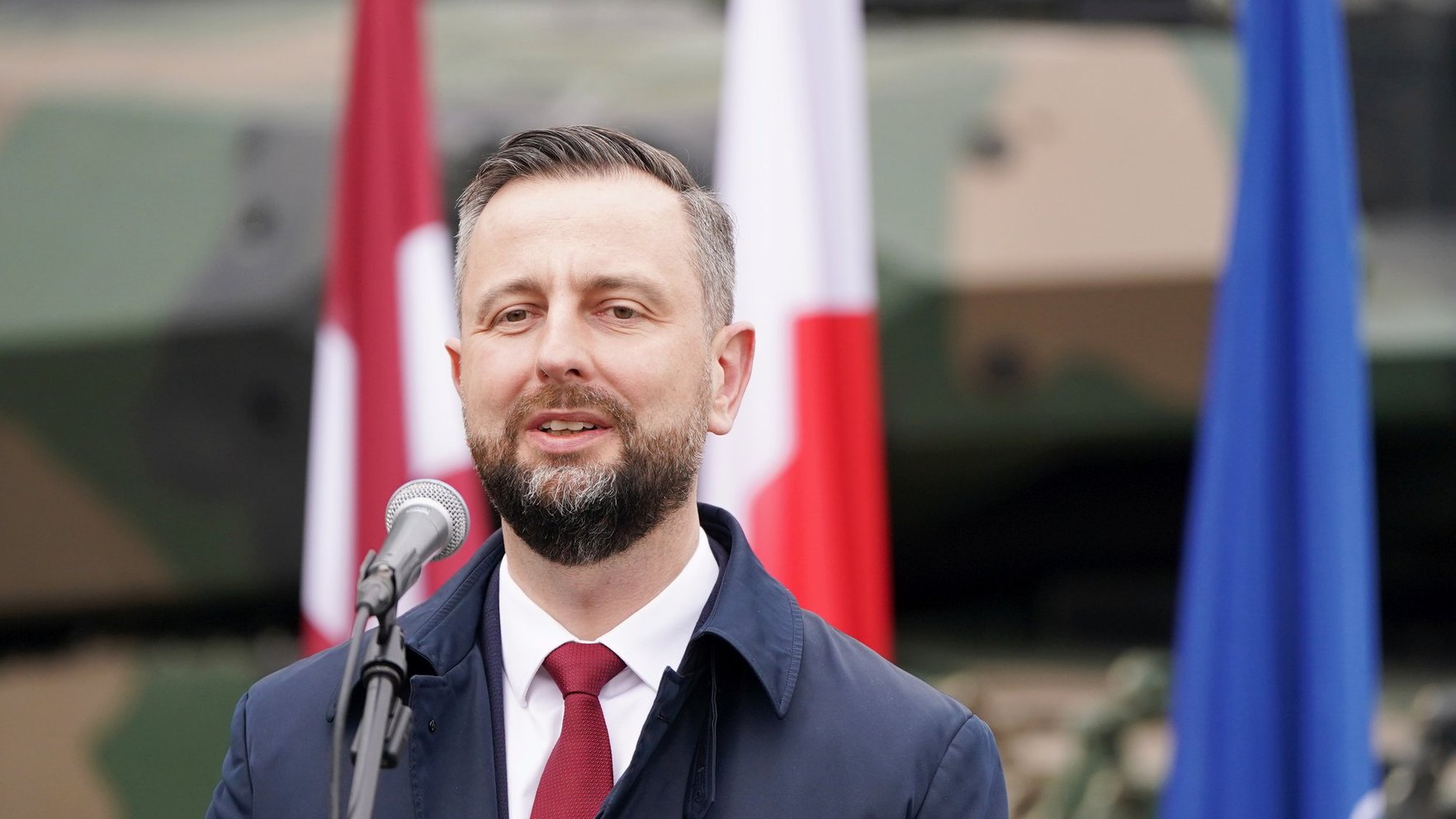
Europe must put its defence industry on a "war footing" to keep pace with Russia, Polish Defence Minister Władysław Kosiniak-Kamysz said on 13 October at the Warsaw Security Forum. According to him, Russia is already producing weapons in wartime mode, and Europe must not "sleep", because the period of peace is over and the continent has to prepare to defend its civilisation. His remarks were reported by the Polish outlet TVP World.
Figures on Russia and Europe
An analysis by the Stockholm International Peace Research Institute indicates that Russia spent roughly 7.5% of its gross domestic product on the military in 2025. Data from Estonia's Foreign Intelligence Service shows Russia produced around seven million units of artillery, mortar, tank and missile ammunition.
By comparison, a leaked European Union report cited by Euronews says EU member states' defence spending last year came to about 2.2% of their combined GDP. The same report estimates that this year all 27 EU countries together with Norway will produce two million artillery shells.
Dispute over the EU budget
At a joint press conference with EU Commissioner for Defence and Space Andrius Kubilius, Kosiniak-Kamysz stressed that production capacity must be expanded now to avoid higher costs later. He said Poland favours more spending on defence and security in the EU budget, and described the Irish presidency's proposals as "unacceptable" to Poland.
Ireland, which chairs the Council of the EU on a six-month rotation, on Saturday presented a budget proposal for 2028–2034. It envisages spending 8% lower than the European Commission's plan and cuts by about 13% a broader category covering competitiveness, prosperity and security.
The minister acknowledged that EU-level defence funding has grown considerably under Kubilius, but said it must increase further.
Latvia's participation
Latvian Deputy Speaker of the Saeima Zanda Kalniņa-Lukaševica (New Unity) also attended. She was among the working group members who helped draft the forum's strategic report on strengthening European security from NATO's eastern flank to the High North. It argues that the Baltic states, the Nordic countries and Poland should become shapers of Europe's security architecture.
The Warsaw Security Forum took place on 12 and 13 October and brought together more than 2,500 participants from about 90 countries.