Polish farmer grows rare medicinal herbs on 7 hectares, with arnica flowers fetching up to 250 zloty per kilo
Konrad Ranecki, a Polish farmer, runs a herb farm of about 7 hectares and specialises in rare medicinal plants. He describes high costs, labour shortages and strict quality requirements.
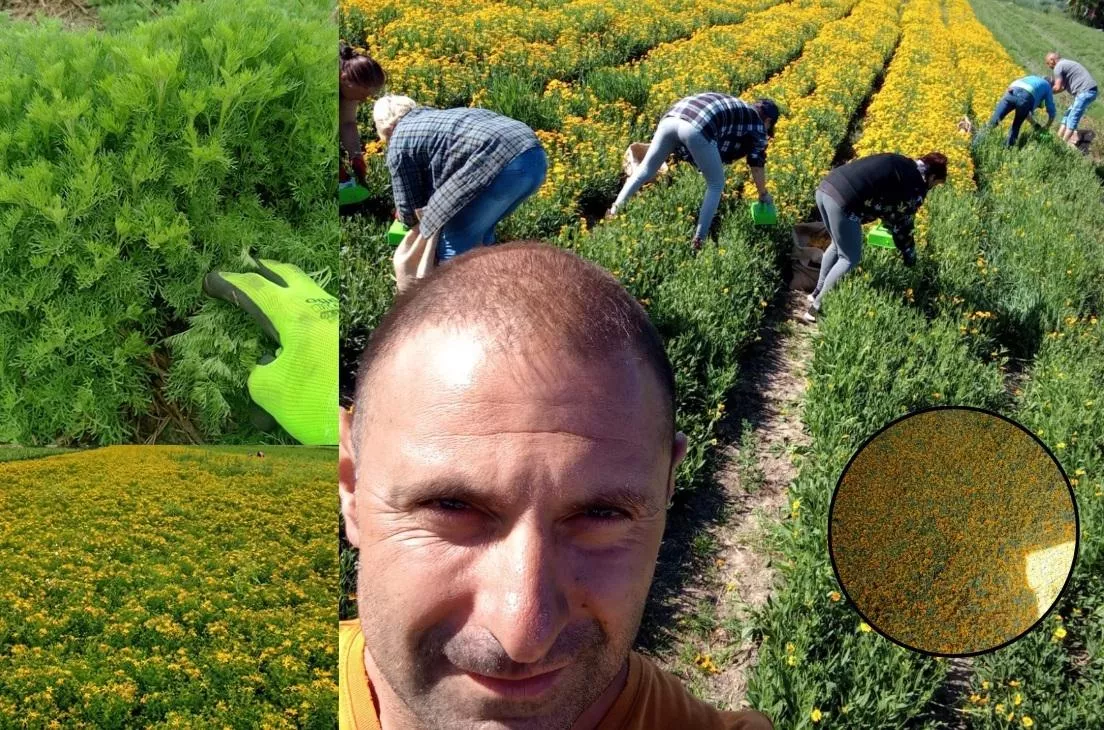
Konrad Ranecki, a farmer in Poland, manages a medicinal herb farm of roughly 7 hectares. Instead of growing cereals, he chose a niche that few farms enter. He shared his experience with the Polish agricultural portal topagrar.pl, illustrating both the opportunities and the difficulties facing a small farm that takes an unconventional route.
The farm is moving away from widely popular herbs such as lemon balm and ribwort plantain, looking instead for rarely grown and demanding species. The fields include arnica, mugwort, stinging nettle, St John's wort and dandelion. Some plantations are regularly removed and re-established, since even perennial plants have a limited useful life.
Arnica: more than ten years of work
Arnica occupies about half a hectare. Developing its cultivation took more than ten years, as the first seeds bought did not germinate. By the farmer's estimate, establishing one hectare of arnica costs 80,000–100,000 zloty, and seeds must be imported. As far as he has been able to establish, there are only two or three arnica producers in Poland. Flowers are picked by hand twice: in May and June, and again at the end of summer. The price of arnica flowers can reach about 250 zloty per kilogram.
Quality demands and drying
Buyers, mainly makers of medicines, dietary supplements and teas, set strict requirements. Raw material for pharmaceutical use may be tested for up to 180 pesticide active substances, as well as pyrrolizidine alkaloids that can originate from certain weeds. According to the farmer, just six common groundsel plants per hectare can lead to a whole batch being rejected. Flowers must be dried within 48 hours, otherwise production stops being profitable. Ranecki built the drying installation himself.
Gaps in the sector
At peak season four women and one man work on the farm, yet more staff are needed. The sector lacks documented cultivation methods and a dedicated seed market, and most insurers do not offer cover for herbs. The farmer has not gone organic, saying organic herb prices are too low relative to costs. For the past two years he has also provided services to other growers, mowing, shredding and packing St John's wort. His busiest period runs from May to November.


