Putin signs decree allowing state to seize control of firms that fail to stop Ukrainian drones
Russian President Vladimir Putin has signed a decree letting the state impose temporary management on critical infrastructure facilities whose owners fail to adequately protect them from Ukrainian drone strikes. Experts say the decree's vague wording leaves businesses without legal certainty.
Starting August 24, Russian authorities gained the power to place critical infrastructure facilities under temporary state management if their owners fail to take adequate security measures against drone attacks. President Vladimir Putin signed the decree.
Under its terms, a temporary administrator — either Rosimushchestvo, Russia's federal property agency, or another entity chosen by authorities — can take control of all or part of a company's assets, gaining an owner's powers without the right to sell the property. No time limit is set for how long such management can last; authorities decide. Revenue generated from the seized assets goes toward their upkeep.
Grounds for imposing such management include failing to take security measures or taking them late, not meeting security requirements set by authorities, creating a threat to a facility through ineffective countermeasures against drones, or delaying repairs after damage. The decree applies broadly across the fuel and energy sector, industry, communications, utilities, transport, and logistics, as well as other facilities deemed vital to national security and economic stability.
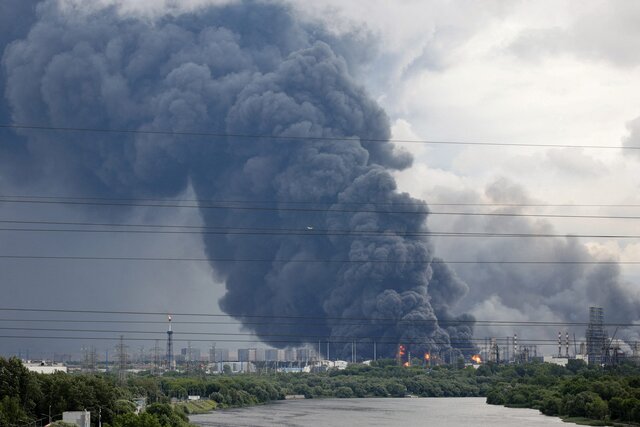
Authorities justified the move by citing growing security threats amid the war. In recent months, Ukrainian drones have repeatedly struck Russian oil refineries, fuel depots, and logistics facilities belonging to online marketplaces Wildberries and Ozon.
Criticism and ambiguity
Experts interviewed by the business outlet RBC noted that the decree sets no specific requirements or deadlines, and it remains unclear who would document a violation or how quickly damage must be repaired. In effect, they said, businesses face an obligation to fix attack damage immediately at any cost, while government agencies retain broad discretion in judging what counts as adequate protection.
A fuel-industry source told Kommersant that oil companies already bear obligations to defend and repair refineries, and the decree fails to clarify how responsibility is divided with the Defense Ministry. The independent outlet The Bell noted that private companies have limited ability to defend themselves against drones, since only a handful of state agencies — including the National Guard and the FSB — are legally permitted to intercept or disable them.
Another Kommersant source suggested the decree will likely affect mainly independent refiners and certain private regional companies, including some in Russia's southern border regions. The Bell suggested the decree may also serve to protect state investments in marketplaces rebuilt after drone strikes.
Temporary management is not a new tool — since the invasion began, it has been applied mainly to foreign companies' assets, while Russian businesses have typically been nationalized through lawsuits from the Prosecutor General's Office. The Bell noted that such management has often preceded ownership changes, as with Danone's Russian business and the brewer Baltika.
Deputy Prime Minister Denis Manturov insisted the measure does not amount to nationalization and would be applied only in select, carefully considered cases. Kremlin spokesman Dmitry Peskov said business owners often fail to pay proper attention to security.