Rail Baltica: Tallinn–Pärnu Section Planned to Open by 2032
Rail Baltic Estonia has revised its schedule after the Estonian government pushed the project's completion from 2030 to 2034, planning to launch the Tallinn–Pärnu section by 2032. The delay and inflation will raise the cost of future contracts.
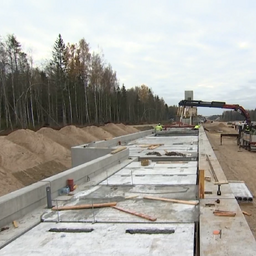
The cost of the Rail Baltica railway line in Estonia will rise further, though it is not yet clear by how much. Company management says the longer construction timeline will make future contracts more expensive because of inflation.
After the Estonian government decided to move the project's completion from 2030 to 2034, the company Rail Baltic Estonia also revised its plans. The Tallinn–Pärnu section is now expected to be fully operational by 2032. Because of funding difficulties, part of the resources was shifted from the Pärnu–Ikla section to speed up the line to Pärnu, according to the broadcaster Aktuaalne kaamera.
"To reduce technical risks somewhat, especially in the final stage of the schedule, certain measures had to be taken. For engineers it may have been an unpleasant decision: some work, particularly on the southern sections, meaning Pärnu–Ikla, had to be postponed," said Anvar Salomets, chairman of the management board of Rail Baltic Estonia.
Plans through 2030
By the end of 2030, the section from Ülemiste to Tootsi is to be fully prepared and testing with special rolling stock is to begin. The focus on shorter sections stems from uncertainty over further European funding.
"Of course, all of this is for now based on certain assumptions, because agreements on the European Union's new budget period are still being prepared. In setting deadlines, Rail Baltic Estonia assumes that the state will provide the necessary funding," Salomets explained.
Costs
The state expects to receive 660 million euros from EU funds. Extending the timeline lets the financial burden be spread into the future, so the annual strain on the budget is smaller, but inflation over the additional four years will also raise the project's cost. Lauri Ulm, technical director of Rail Baltic Estonia, notes that earthworks for the future line are already almost fully covered by contracts, so no further price increases are expected there.
"Building one kilometre of roadbed costs us roughly 7–8 million euros. If the total construction cost is 3.5 billion euros and the railway is 200 kilometres long, that comes to about 17.5 million euros per kilometre. So roadbed construction is slightly less than half of that sum. The rest goes to track superstructure, technical equipment, traffic control systems and electrification," Ulm said.
Rail Baltic Estonia hopes Latvia will meet its obligations to build its own section of the railway. Lithuania, for its part, is following the previously set schedule and is already building the line from Kaunas toward the Latvian border.


