Record diesel prices squeeze US Midwest corn belt farmers during harvest
Soaring diesel prices across the Midwest are driving up harvest costs for corn and soybean farmers, truckers and school districts, with analysts citing refinery disruptions and a depleted strategic reserve.
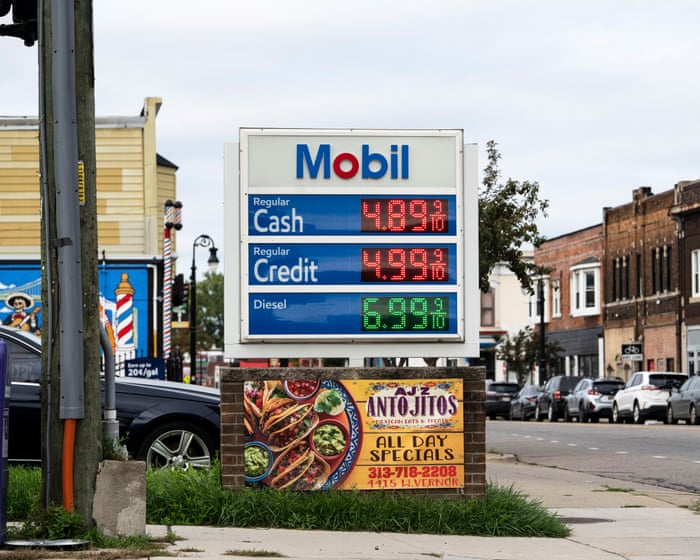
As harvest season begins across the eastern corn belt, farmers like Joe Hamilton, who grows corn and soybeans on 2,500 acres in Indiana, are bracing for record fuel bills. Running four tractors, two combines and five semi-trucks, Hamilton expects to burn roughly 300 gallons of diesel a day over about 30 harvest days, adding up to around 9,000 gallons at historically high prices.
With an estimated 20 billion bushels of corn and soybeans due to be harvested across the Midwest by the end of November, diesel prices have surged particularly hard in the region. Four of the five US states with the steepest weekly diesel price increases in September were in the Midwest — Illinois, Michigan, Ohio and Indiana — where fuel has risen more than $3 a gallon compared with a year earlier. Analysts estimate that the war involving Iran, damaged refineries in Russia and regional supply disruptions could add roughly $12,500 in fuel costs for every 1,000 acres harvested.
Regional refinery problems have compounded the pressure. An ExxonMobil refinery in Joliet, Illinois, was shut for more than a week after a power outage and flooding, taking over 80 million gallons of fuel offline, while a six-month labor dispute at a major BP refinery in Whiting, Indiana, has further tightened supply. Kurt Lykins, a lecturer at Otterbein University, notes the Midwest has fewer refineries than coastal regions and limited ability to bring in additional supply, making it especially vulnerable. He also points to concerns over the US Strategic Petroleum Reserve, now at its lowest level in 43 years after sustained drawdowns that have helped cushion prices — a buffer he warns won't last indefinitely, especially heading into winter's high-demand season.
The fuel costs ripple beyond farms. In Ohio, roughly 800,000 students rely on some 15,000 diesel-powered school buses, and the Columbus school district — already facing a projected $157m deficit by 2031 — is watching transportation costs closely. Nationally, nearly 40% of surveyed school districts report consolidating bus routes to cut fuel spending, while 20% have trimmed non-essential trips like field trips.
Hamilton has adopted no-till and cover-crop methods to reduce machinery use, but cannot avoid elevated fuel costs entirely, noting diesel is $3 more per gallon than a year ago even as soybean and corn prices have also risen. Observers expect high prices to persist as the reserve will need time to rebuild.