Record-Speed Satellite Rescue: NASA's Swift Mission Gets a Lifeline from Katalyst's Link Spacecraft
In under a year, NASA and Katalyst Space Technologies have built and prepared a satellite to boost the aging Swift observatory's orbit, aiming to save a critical astrophysics mission from atmospheric reentry.
NASA faced an urgent problem: the Swift observatory, launched in 2004 to detect gamma-ray bursts, was losing altitude faster than expected due to solar activity. The spacecraft lacks thrusters, and its orbit had dropped from 585 km to 363 km, with a critical threshold of 300 km expected by fall 2025 (2026). To save the $500 million mission, NASA last August asked three companies if they could build and launch a rescue satellite in under a year on a tight budget.
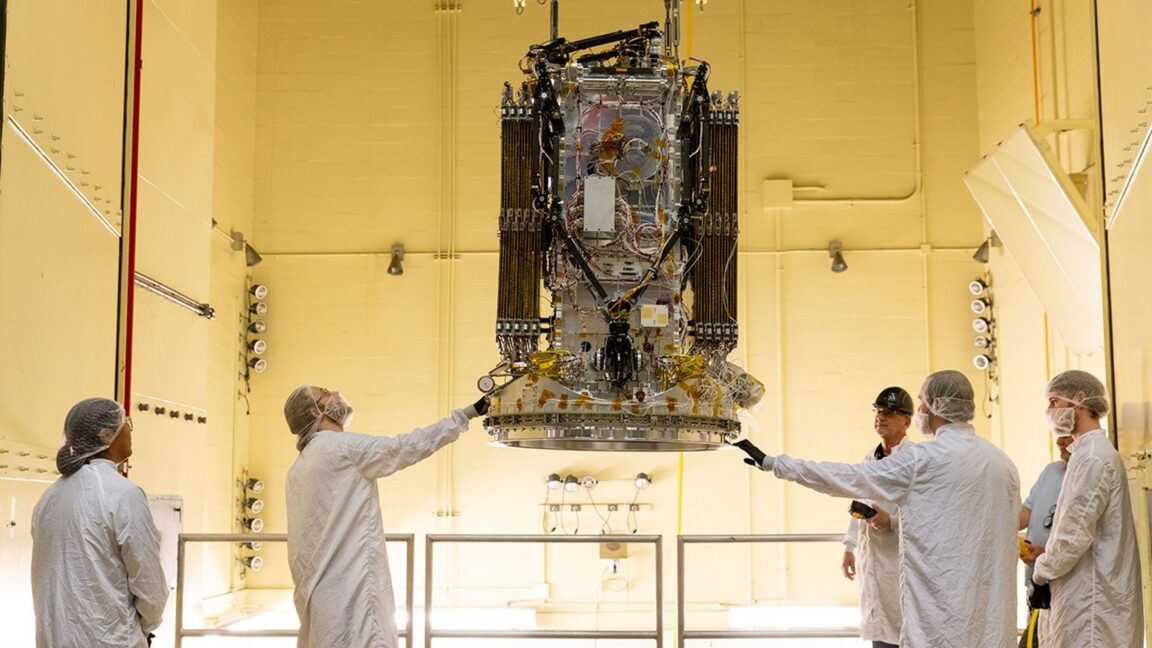
Katalyst Space Technologies, a startup founded in 2020, proposed the most feasible plan: use its Link servicing spacecraft to grapple Swift with three robotic arms and boost it to a safer orbit. In September, NASA awarded Katalyst a $30 million contract. Over the next ten months, Katalyst designed, built, and tested Link. The satellite weighs less than half a ton and uses xenon-fueled Hall-effect thrusters.
Link completed thermal vacuum and vibration tests at NASA's Goddard Space Flight Center, then was shipped to Wallops Flight Facility in Virginia for integration with Northrop Grumman's Pegasus XL rocket—the last of its kind. Launch is scheduled for June 27 from a Pacific location near Kwajalein Atoll, after the carrier aircraft departs Wallops.
The biggest challenge was time. Swift could fall below 300 km by October, making approach impossible. To meet the deadline, Katalyst accepted higher risk, built parts in-house when suppliers couldn't deliver, and streamlined testing. "The clock is ticking on Swift's descent, so we have to find a balance between testing and problem solving," said Kieran Wilson, Link's principal investigator.
If successful, it will be the first robotic capture of an unprepared satellite for an operational service. "I consider this a success already, just from the fact that we're even going to try this," said Shawn Domagal-Goldman, NASA's astrophysics division director. The mission sets a new template for responsive space operations.