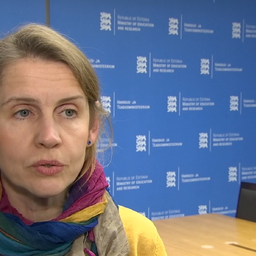
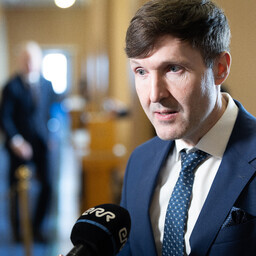
Remo Kirss: The state must invest in all connections
Estonia's 2026 budget allocates over half a billion euros for road and local rail construction and maintenance, with an additional €435.7 million for Rail Baltic. Kirss argues for proactive infrastructure planning and public-private cooperation.

Estonia's 2026 state budget sets aside more than €500 million for the construction and maintenance of roads and local railways, plus an additional €435.7 million for the Rail Baltic project. The 2026–2029 national road maintenance plan exceeds €1 billion, covering upgrades to main roads, reconstruction, dust-free surfaces on gravel roads, and the rebuilding of dangerous traffic locations.
According to logistics expert Remo Kirss, these investments represent strategic regional, economic, and security policy. Poor road conditions directly increase logistics costs through higher fuel and time consumption, as well as greater vehicle maintenance expenses, which eventually raise service prices.
Kirss highlights Estonia's regional diversity as a strength. High-quality, fast connections allow people to live further from their workplaces and businesses to operate outside Tallinn. He contrasts this with Latvia, where 45.6% of the population lives in the greater Riga region, while Estonia has developed a dual-center logic with Tartu as a strong second city.
Since June 1, Estonia has allowed 25.25-meter-long and up to 60-tonne European Modular System (EMS) truck combinations on its roads. While this improves freight efficiency, it also raises safety concerns, particularly regarding overtaking. The Transport Administration plans to restrict these trucks to specific routes, mainly Tallinn–Narva, the Tallinn ring road, and the Tallinn–Pärnu and Tallinn–Tartu corridors.
On energy infrastructure, Kirss points to a chicken-and-egg problem: whether to wait for a major investor before building the grid or to create prerequisites in advance. The International Energy Agency forecasts global data-center electricity consumption will double by 2030 to around 945 TWh. Since energy infrastructure planning takes longer than tech investment cycles, the state must be proactive.
Kirss concludes that high-speed rail, main roads, and the electricity grid are interconnected and essential for Estonia's future economy. The government's key task, regardless of election cycles, is to ensure that life does not concentrate solely in the capital, and that goods, people, energy, and information move quickly and reliably across the entire country.