Western Australia facial recognition trial scans over a million faces, leading to 122 arrests
Western Australia's police have ended a five-month trial of real-time facial recognition technology that scanned 1,380,882 faces and led to 122 arrests. Civil liberties advocates have criticised how police calculated the error rate.
Police in the Australian state of Western Australia concluded a five-month trial of real-time facial recognition technology on Saturday, having scanned 1,380,882 faces. The system led to 122 arrests but also produced nine incorrect alerts. The trial has prompted debate over privacy and possible algorithmic bias.
Trial results
According to police, the technology was deployed 100 times at 43 locations across metropolitan and regional areas. Beyond the 122 arrests, alerts led officers to engage with 146 registered sex offenders, and police located 10 people for welfare checks.
Three operations took place at the Perth Royal Show, where 223,749 faces were scanned. They produced 15 alerts, three arrests and seven interactions with registered sex offenders.
A police spokesperson confirmed nine incorrect alerts out of about 1.38 million scans, an error rate of 0.00065%. Police commissioner Col Blanch told a media conference on Sunday that nobody wrongly flagged was arrested and nobody lodged a complaint, but that officers spoke to each person and asked relevant questions. He acknowledged the technology is not perfect, which authorities knew before the trial began.
Criticism
Bill Rowlings, chief executive of Civil Liberties Australia, a group that defends civil rights, said police were presenting the figure too favourably. In his view, the true error rate will only be known once the 122 people arrested have their cases heard in court; if half are not convicted, he said, the rate would be 50%. He also said the scans were carried out without reasonable suspicion.
The state's independent privacy watchdog, the Office of the Information Commissioner WA, said when the trial was announced that it had not been involved in its implementation and warned of "collective privacy harms". Experts say the technology could disproportionately affect marginalised groups, as such algorithms have historically had higher false-match rates for people with darker skin tones.
How the system worked
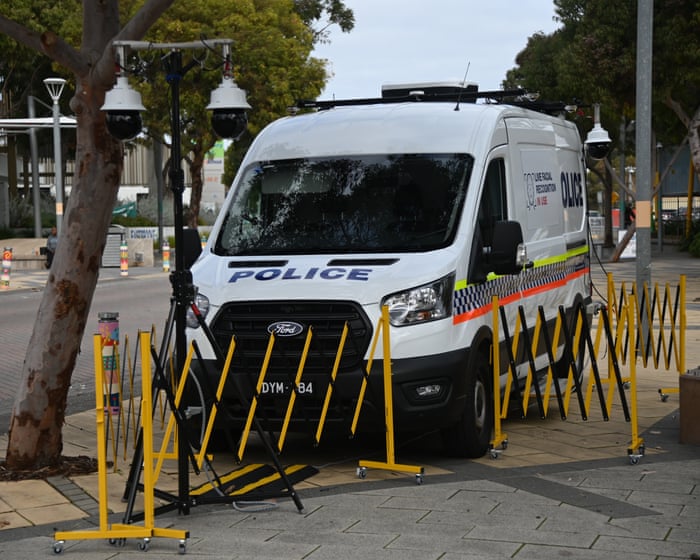
Cameras mounted on or near marked police vehicles scanned faces in designated public areas and compared them against an alert list drawn from police databases. Police say images of people not on the list were pixelated in real time and deleted immediately without being stored. The surveillance vans have now been withdrawn from public deployment while police carry out an internal evaluation, including a review of whether safeguards were in place and requirements met.