Samsung Announces Next-Generation 3D Memory Solutions for AI Data Centers
Samsung showcased several new memory and storage technologies primarily aimed at AI data centers, leaving regular computer users still waiting for affordable DDR5.
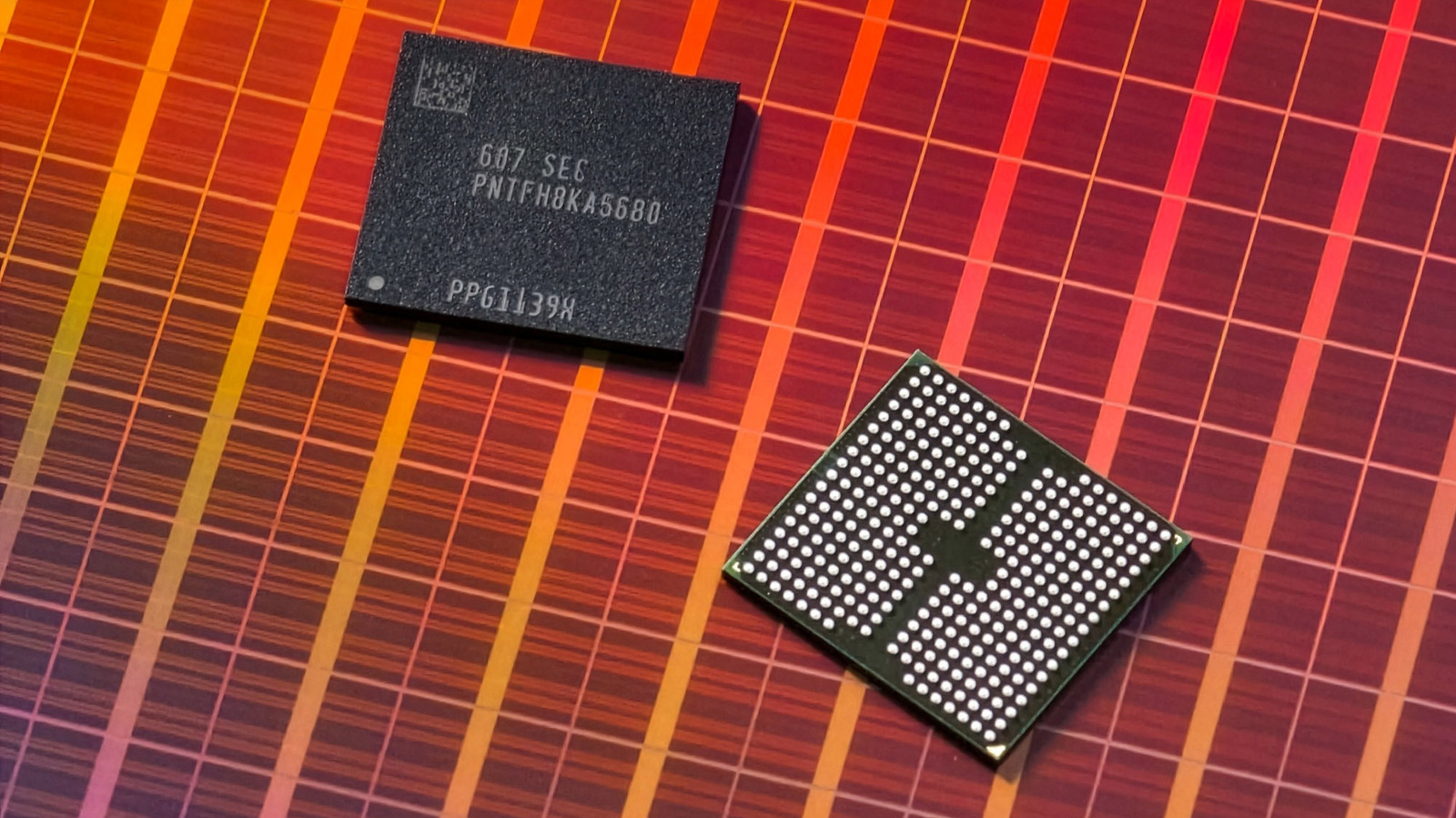
Samsung has demonstrated a range of new memory and storage solutions at the Future of Memory and Storage event in Santa Clara. While the technologies are impressive, the company acknowledged that most of the output will be absorbed by AI data centers rather than consumer devices. Among the announcements were the first concept models of zHBM, built on HBM memory typically used in data centers, AI accelerators, and a limited number of high-end GPUs. The new architecture stacks HBM vertically above AI accelerators instead of alongside them, potentially delivering up to eight times higher performance. The use of next-generation wafer bonding also provides more than ten times the memory density of current HBM5, along with a threefold improvement in energy efficiency.
Samsung also presented V10 BV-NAND, a new type of V-NAND memory designed for SSDs, memory cards, and other storage. It uses a bonding architecture that allows more than 400 layers of memory cells, boosting density by about 58 percent compared to the previous V9 generation and improving read, write, and I/O performance. Another product, zNAND-O, is aimed at edge AI environments, offering high space efficiency, better I/O performance, and low latency. Additionally, the company introduced LPDDR5X-PIM, described as the industry's first LPDDR memory with processing-in-memory capabilities, enabling data processing inside the memory module itself.
The announcements come as Samsung and SK Hynix, which together control the majority of memory production, struggle to keep pace with demand fueled by the current AI boom. This supply shortfall has led to soaring prices for electronics across the board, including game consoles, smartphones, and laptops. For consumers hoping for more affordable DDR5 RAM, the latest developments may offer little immediate relief, as the new technologies are primarily geared toward enterprise AI workloads.