Satellite images reveal Europe's parched landscapes after summer heatwaves
Satellite imagery shows repeated heatwaves since May have shrunk Alpine glaciers, dried out rivers and left scorched land across parts of western Europe. The EU's climate service confirmed June-to-July was the region's hottest such period on record.
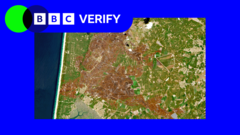
Satellite images analysed by BBC Verify show how this summer's extreme heat has reshaped landscapes across western Europe, from shrinking glaciers and wildfire-scarred land to parched fields and falling river levels. Even the Palace of Versailles near Paris now appears as a green island surrounded by browned fields. The EU's climate monitoring service, Copernicus, has confirmed western Europe experienced its hottest June-to-July period on record. Forecasters point to persistent high-pressure systems bringing clear, sunny skies as the immediate trigger, while long-term climate change, driven largely by fossil fuel burning, has made such intense heat spells increasingly likely.
Rivers and glaciers under strain
The Danube, Europe's second-longest river, has fallen to its lowest levels in 30 years in several countries, exposing a mammoth's bones in Bulgaria and a sunken World War Two warship in Serbia. In Hungary and Romania, nuclear power plants have had to shut down or cut output because there wasn't enough river water for cooling, while on the Rhine, cargo vessels have been stranded and cruises cancelled. Alpine glaciers have also suffered badly, with this summer on track to be one of the worst on record for melting. Switzerland's Rhône Glacier has retreated by at least 50m at its front compared with the same time last year, following a mild winter with low snow cover and an early May heatwave that exposed the ice beneath.
Wildfires and drying land
Wildfires have burned more than 90,000 hectares in France so far, making this its worst year on record, with the largest blaze in the Gironde region near Bordeaux destroying about 42,000 hectares. Vegetation health analysis of satellite data shows about 70% of France, nearly half of the UK and roughly 40% of western Germany registering below their five-year average this summer. Scientists warn the dryness signals widespread water stress that could hurt agriculture and food production, and that some damage may persist even if rain eventually returns.