Old shed foundations and one land registry entry: dune-zone building dispute reaches Supreme Court
A dispute over a property in Apšuciems, where a house was to be justified in the Baltic Sea dune protection zone by old shed foundations and a single land registry entry, has reached Latvia's Supreme Court.
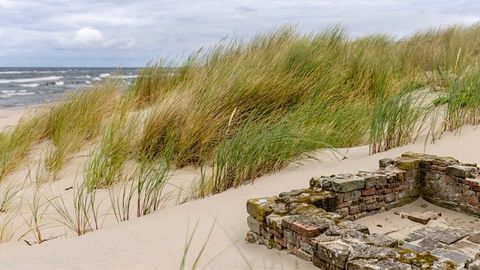
In Apšuciems, within the protective dune zone along the Baltic Sea coast, a property that was once someone's dream of a small house by the sea has turned into the subject of prolonged litigation. The case has now reached the Supreme Court, whose ruling could carry weight for similar coastal construction disputes.
The core of the dispute
The court must decide whether decades-old remnants of a shed's foundations, together with a single entry in the Land Register, can serve as sufficient legal grounds to bypass the statutory ban on erecting new buildings within the dune protection zone. Such protective zones along the Baltic coast exist to limit construction in close proximity to the sea, meaning new buildings are generally not permitted there.
Why the case is complicated
Those connected to the property appear to have hoped that the historical presence of building foundations, combined with a corresponding land registry record, might be treated as adequate justification for building on the site of what was once a small farm shed. However, this interpretation runs up against strict legislation designed to protect the sensitive dune ecosystem from development.
The fact that the dispute has climbed all the way to the Supreme Court suggests the matter could not be resolved unambiguously in the lower courts. The outcome of this case may become an important reference point for future disputes, in which owners of coastal properties attempt to justify new construction by pointing to historical evidence of buildings that once stood there.