Finland's government explores ways to lower fuel prices
Finland's government is weighing tax and compensation measures to ease the burden of record-high fuel prices, though no simple fix exists. Both ruling and opposition politicians are involved in the discussions.
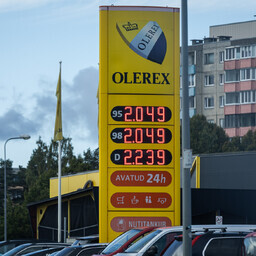
Finland's government is searching for ways to ease the burden of high fuel prices, including possible tax measures. In September, petrol prices in parts of Finland climbed to 2.5 euros per liter.
Prime Minister Petteri Orpo said over the weekend that a "pain threshold" on fuel prices has officially been crossed. He noted the government is discussing various options, but there is no simple solution. Talks include tax decisions, compensation for commuting costs, the mandatory biofuel blending requirement, and excise tax compensation for transport companies using diesel.
Political disagreement
The Swedish People's Party, part of the government, has proposed cutting turnover tax on motor fuel, which would require European Union approval. The opposition Social Democrats oppose the idea — MP Tytti Tuppurainen warned it would mainly benefit foreign transport companies whose trucks refuel in Finland. Instead, the Social Democrats propose first reducing the personal contribution share for commuting costs and raising the upper limit of the related compensation, while also supporting excise compensation for transport companies.
Jukka Kopra, an MP from the governing Coalition Party, said on Yle that the government has already made commuting compensation more favorable and is discussing other measures on an accelerated timeline. He said cutting the mandatory biofuel share is the most problematic option since its effect would not be immediate, while cutting excise tax would most quickly affect pump prices. However, all the measures under consideration are costly — lowering excise tax enough to cut pump prices by 30 cents per liter would cost the Finnish budget roughly one billion euros.
Harri Harkimo, leader of the small parliamentary party Liike Nyt, drew attention last week by accusing fuel company Neste and others of excessive profits, noting Neste earned over a billion euros in just half a year this year. Neste responded that the final price is shaped by global market prices, exchange rates, local competition and taxation, with taxes making up nearly 60% of the pump price paid by consumers.
Heikki Liimatainen, a professor at Tampere University, said fuel prices below two euros per liter should no longer be expected, and that by 2028 at the latest, when the EU's emissions trading system expands to the transport sector, another significant price jump of at least 15 cents per liter is likely.