SpaceX gears up for 13th Starship test flight with real Starlink satellites
SpaceX is preparing for its 13th Starship test flight, potentially as soon as Thursday, featuring 20 operational Starlink V3 satellites, a Raptor engine restart attempt, and heat shield upgrades.
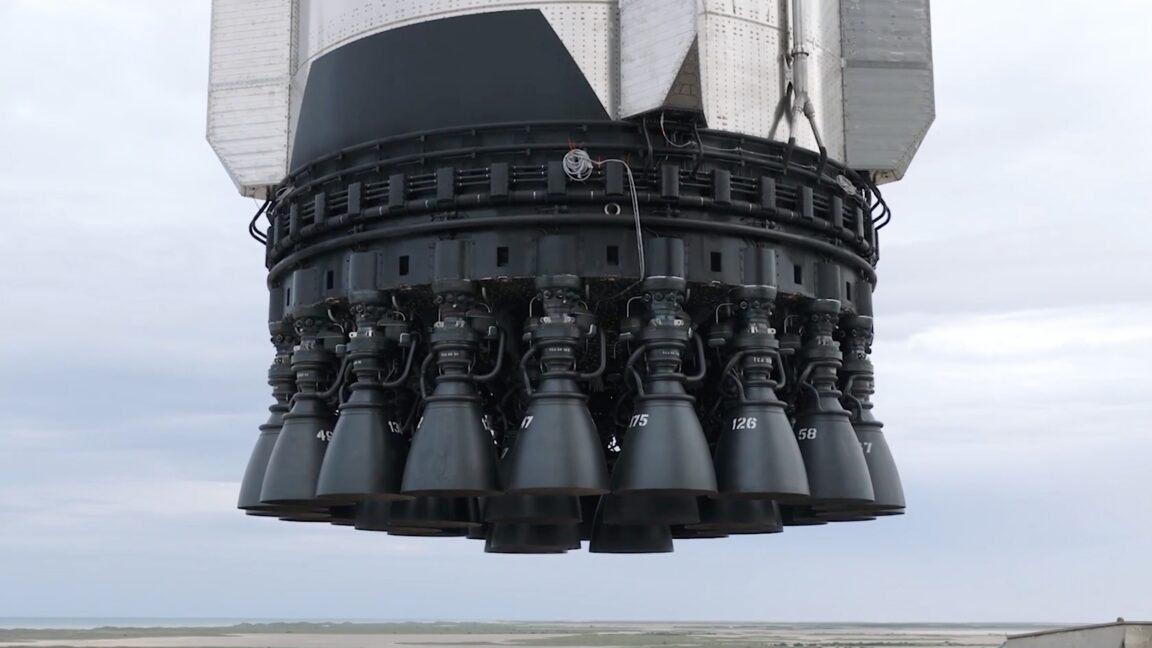
SpaceX is preparing for the next test flight of its Starship spacecraft and Super Heavy booster, which could take off as early as Thursday at 22:45 UTC. This will be the 13th full-scale test flight and the second using the latest version of Starship.
The most notable change is the inclusion of 20 real, functioning Starlink V3 satellites in the cargo bay. Previously, only mass and dimension simulators were used. The satellites will be ejected one by one through a side opening, but they will not join the operational network. Engineers will attempt to establish laser communication links between these satellites and other spacecraft in low-Earth orbit to validate interoperability with previous-generation Starlink satellites.
Some of the Starlink satellites are equipped with cameras to image Starship's heat shield and transmit the footage to ground engineers. This will help assess the shield's readiness for return-to-launch-site missions in the future. The imaging will occur at night, similar to the previous flight.
The flight trajectory will be suborbital, arcing from Texas to the Indian Ocean northwest of Australia. After just over an hour, both Starship and the satellites will re-enter the atmosphere and burn up, with Starship performing a controlled splashdown.
SpaceX will attempt to relight one of the six Raptor engines in space—a task that failed on Flight 12 when an engine shut down prematurely. The Super Heavy booster's separation maneuver has also been corrected; previously, the booster rotated approximately 90 degrees off course, and five of its 33 engines had issues during relight. SpaceX has made hardware and software modifications to address these problems.
Additionally, the flight will test improved heat shield tiles and attachment mechanisms, as well as load-sensing tiles that will measure stress during ascent under higher dynamic pressure. These changes are part of efforts to make Starship fully reusable.
A successful mission would bring SpaceX closer to an orbital flight, enabling real satellite launches, in-orbit refueling demonstrations, and the return of Starship to Texas for reuse.