SpaceX engineers head to remote Australian island to retrieve Starship stage
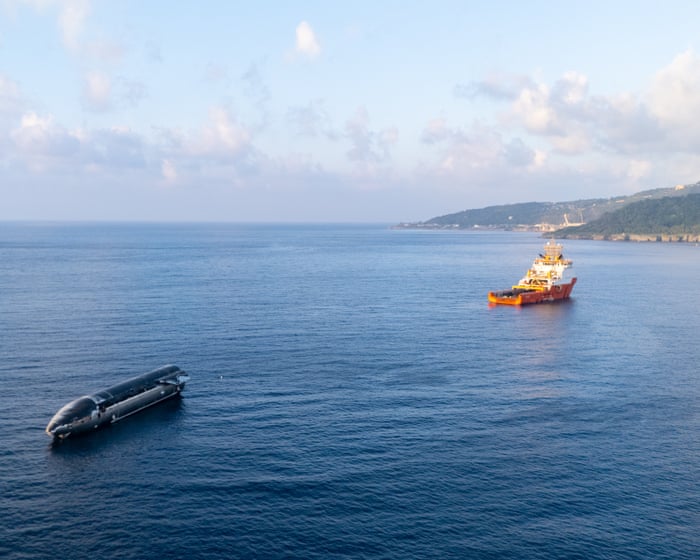
After Starship's 13th test flight, the rocket's upper stage came down in the Indian Ocean near Australia's Christmas Island, and SpaceX has towed it ashore before attempting to return it to Starbase.
A Starship spacecraft launched by Elon Musk's SpaceX from Texas on 24 July completed the vehicle's 13th test flight, reaching orbit and releasing 20 non-functioning satellites before its upper stage re-entered the atmosphere and came down in the Indian Ocean.
Over recent weeks, SpaceX's recovery team worked amid rough seas to retrieve the 52-metre-long piece of spacecraft, aiming to tow it to calmer waters for further study. The company said on social media that it had successfully guided Starship to a location just off Christmas Island, and that engineers were on their way to conduct further analysis before attempting to return the vehicle to Starbase.
Local reaction
David Watchorn, chair of the Christmas Island Tourism Association, said most islanders woke on Tuesday to what looked like three large ships, only to realise on closer inspection that one was a black rocket. He said the spacecraft's arrival had become the main topic of conversation on the island, with locals hoping the attention might draw more tourists to see its rugged landscapes and distinctive wildlife, including red crabs and flying foxes. An exclusion zone has been set up to keep recreational boats away from the site.
Wider context and risks
The event follows a separate incident in which six suspected pieces of rocket debris, dubbed "space balls", washed up in north Queensland. Alice Gorman, an associate professor of space archaeology at Flinders University, said the number of active satellites has grown from about 5,000 to roughly 16,000, around 10,000 of them part of SpaceX's constellations, driving a rise in rocket debris both in orbit and falling to Earth. She noted upper-stage rocket bodies can pose risks from toxic materials or leftover fuel, but that the piece off Christmas Island appeared largely intact, suggesting a lower risk of fuel leakage.
Dr Hadrien Devillepoix of Curtin University said the episode highlights the potential to recover and reuse different rocket stages, noting that recovery efforts have so far focused mainly on first stages rather than upper stages like this one. It remains unclear whether any material will stay on the island or be fully removed by the company.