Spain's unemployment falls below 2.3 million for first time since January 2008
Spain's registered unemployment dropped to 2,291,982 in June, the lowest level since before the financial crisis. The decline was driven by the services sector, but the number of people with no previous employment rose.
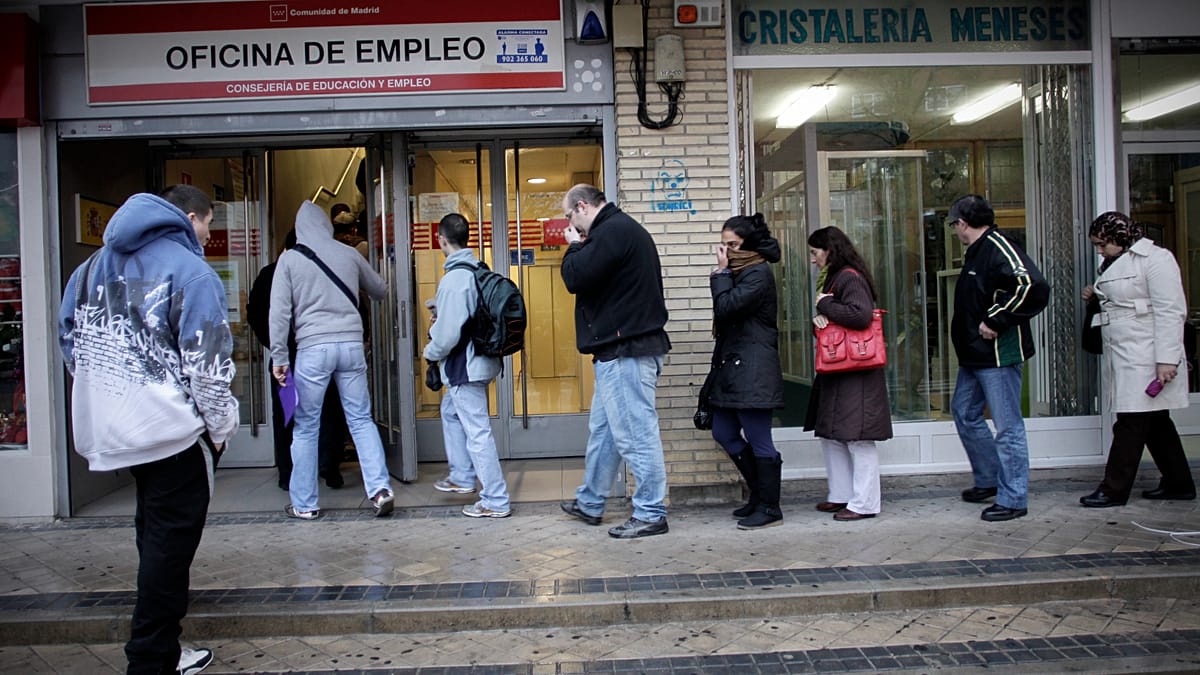
Data released on Thursday by Spain's Ministry of Labour confirmed a trend that had been emerging for months. Registered unemployment fell in June by 28,739 people compared with May, bringing the total to 2,291,982. This level had not been seen since January 2008, before the financial crisis erupted.
The decline is not uniform across sectors. The services sector accounted for almost all of the adjustment, with 28,498 fewer unemployed, fuelled by the start of the tourist season. Industry followed with 2,829 fewer unemployed, construction with 1,326, and agriculture, where the drop was limited to 384. However, one figure breaks the upward trend: the number of people with no previous employment rose by 4,298, indicating that those seeking their first job or trying to re-enter the labour market after a break are finding it more difficult.
By age group, youth unemployment continues to fall: 5,155 fewer young people than in May and 6,907 fewer than a year ago, bringing the total to 159,800 – the lowest level in the entire historical series for this group. The year-on-year decrease is more pronounced among young women, with 4,090 fewer unemployed, compared with 2,817 among men.
Female unemployment has fallen below 1.4 million for the first time since August 2008. Currently, 1.39 million women are out of work, compared with 903,673 men. Over the past month, the decline was almost 16,000 women and 13,000 men; over the past year, 72,000 and 41,000 respectively.
Second Vice-President and Minister of Labour Yolanda Díaz linked part of this improvement to the ongoing regularization process for workers, which she said has made it possible to bring to light jobs that previously existed without legal recognition and which now count both for social security registrations and the recognition of labour rights. In the case of women, the number of contributors over the past year has increased by around 300,000, reaching 10.6 million – the highest figure ever recorded in Spain.
Among unemployed foreign nationals, the number also declined: 342,086 people, 4,208 fewer than in May and 10,068 fewer than a year ago.
Social security registrations hit another record: an average of 128,533 contributors were added compared with May, reaching 22.47 million, an all-time high. Once the calendar effect is stripped out, the seasonally adjusted figure also sets a record, above 22.2 million. Over the past 12 months, the system has gained 600,595 contributors and shed 113,981 unemployed.
Wholesale and retail trade topped monthly growth with 39,325 new registrations, followed by hospitality with 37,696, and administrative and support service activities with 29,316. Looking at the full year, other sectors provide momentum: health and social services add 78,373 contributors, and construction 66,280.
The number of self-employed continued to rise, reaching 3.47 million after adding 12,000 over the month and 50,800 over the year. Registrations of foreign workers reached 3.45 million, more than half a million of them self-employed, with an increase of 86,630 in June and 350,163 over the past 12 months; they now account for more than 15% of all contributors.
Social Security Minister Elma Saiz pointed out that Spain has generated 54.5% of all jobs created in the European Union during this period.