Stubb: Europe Is Living Through a New Dark Age, but Can Overcome It
Finnish President Alexander Stubb told students at the College of Europe in Bruges that wars and great-power rivalry are pushing Europe into a dark age. He also voiced optimism about the continent's future if it strengthens security and cooperation.
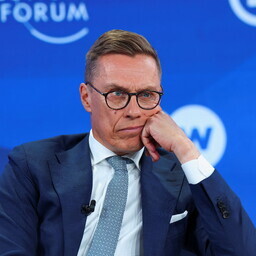
Finnish President Alexander Stubb said on Monday that Europe is going through a dark age, in a speech at the College of Europe in Bruges, Belgium. In his view, numerous wars and great-power rivalry, which has replaced cooperation, are eroding the rules-based world order. The speech was reported by Politico.
Stubb said the era that began after the Cold War has ended and the world is at a turning point comparable to the end of the Second World War in 1945 and the collapse of communism in 1989. He studied at the College of Europe himself in the 1990s. He told the students he had started his studies in a kind of "light age", while they were beginning theirs in a dark one.
A world of every man for himself
The president said graduates will enter a world governed by an "every man for himself" principle. By some estimates, 65 conflicts or wars are under way worldwide, more than at any time since the Second World War. Global security depends largely on whether the United States and China choose cooperation or confrontation.
Europe's strengths
Stubb stressed that the situation is not hopeless. Europe, he said, is more united than ever and is becoming more independent and geopolitically influential. Since Russia's full-scale invasion of Ukraine, Europe has stepped up its military, financial and political support for Ukraine. It also defends international law, concludes trade agreements, leads the fight against climate change and has not fallen hopelessly behind in artificial intelligence.
The most important task, he said, is to build a European security architecture that guarantees Russia never again attacks its neighbours. That requires a process of confidence-building measures. Stubb said the 1975 Helsinki Accords worked, but the OSCE (Organization for Security and Co-operation in Europe) was not strong enough to prevent Russian aggression in Georgia in 2008 and in Ukraine in 2014 and 2022.
EU enlargement
Stubb suggested that in 30 years the European Union could have 40 member states instead of the current 27. Western Balkan countries, Ukraine, Moldova, Iceland, Norway, Switzerland and the United Kingdom could join, while Canada could become at least an associate member.
He ended the speech by saying he is tired of the EU being belittled, noting that nine of the ten countries with the highest quality of life are in Europe. Pessimism, he reminded the audience, is a self-fulfilling prophecy.