Tartu dissertation traces how Lenin promised self-determination yet built a centralized state
University of Tartu doctoral researcher Oliver Rowe argues that the meaning of self-determination during the Russian Empire's collapse (1914–1924) varied depending on who invoked it, and that both Bolsheviks and their rivals believed the center should decide how much autonomy other peoples deserved.
Oliver Rowe defended his doctoral dissertation at the University of Tartu on how the concept of self-determination was used during the collapse of the Russian Empire between 1914 and 1924. His research shows the term's meaning shifted depending on who used it, to whom it was offered, and what kind of document carried the promise.
Rowe focused particularly on political forces that did not seek self-determination for themselves but claimed the right to grant it to others — a pattern he sees as evidence of a shared imperial mindset among many actors of the era, including both the Bolsheviks and several of their opponents. Both camps generally assumed the center should decide the form and extent of self-government granted to the empire's peoples.
Lenin and Stalin's contradiction
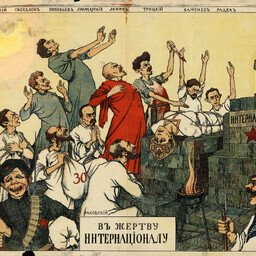
Lenin tied national self-determination directly to the right of secession, yet envisioned a future socialist society as strongly centralized. This tension became sharply apparent after the 1917 revolutions, when secession became a real prospect in Ukraine and Georgia rather than a theoretical one. After the civil war, Stalin began narrowing the concept specifically to the right to secede — a formulation useful to the Bolsheviks, who did not intend to permit real secession within their own state but could invoke the same right to support revolutionary movements elsewhere, such as in Ireland.
Estonia, Ukraine and the Treaty of Tartu
According to Rowe, the type of document mattered greatly: Ukraine's Central Rada declared autonomy through a political statement, while in 1917 Russia's Provisional Government agreed to redraw the borders of the Governorate of Estonia along national lines. As the empire disintegrated further, independence became a realistic option for several movements, and Estonia's delegation to the Treaty of Tartu negotiations insisted that self-determination be explicitly written into the treaty — wording that later served as a model for other Bolshevik peace treaties.
Rowe argues that imperial thinking survived the empire's collapse, describing the early Soviet Union as a hybrid of revolutionary ideology and centralized power. He notes a similar contradiction in today's Russian rhetoric, which justifies the war against Ukraine using language of "liberation" and rights protection.
/nginx/o/2026/09/26/17939272t1h68f7.jpg)