Dubai litigation reveals how Russia's shadow oil trade works under sanctions
Former Rosneft executive Igor Soglayev is in court against Azerbaijani businessmen who trade Russian oil. Litigation documents seen by The Wall Street Journal show how Russian oil and petroleum products have been exported since the war began.
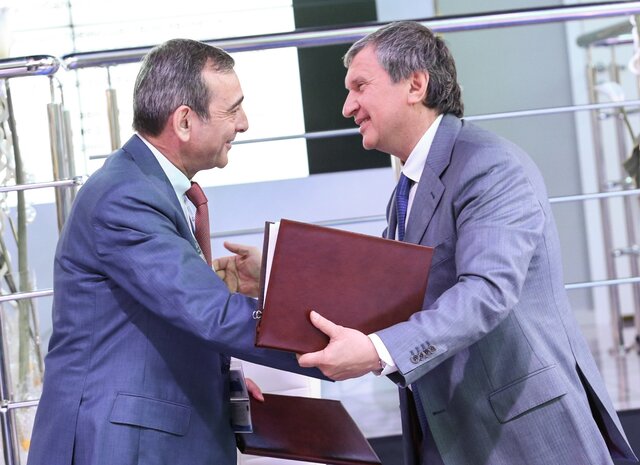
A legal fight is under way in Dubai and Brazil between Igor Soglayev, a former senior executive at Russian oil giant Rosneft, and businessmen Tahir Garayev and Etibar Eyyub, whose network of companies became one of Rosneft's main oil traders. Court documents reviewed by The Wall Street Journal offer a glimpse into how Russian oil and petroleum products have been exported since Russia's full-scale invasion of Ukraine. After the invasion, Russian oil came under sanctions, and little-known intermediaries using shell companies and a shadow fleet of tankers took over a large share of exports.
Who Soglayev is
Soglayev is a former Deutsche Bank executive in Russia and ex-head of SamaraNefteOrgSintez, a petrochemical company Rosneft bought in 2015. He then ran Rosneft's petrochemicals department and, according to the Journal, also advised Rosneft chief Igor Sechin. In 2017 he left to pursue private petrochemical ventures.
Diesel for Brazil
After the war began, Soglayev decided to earn money by selling Russian diesel in Brazil. He wanted to act as an intermediary for buyers concerned that dealing directly with Russia could cause problems with their banks because of sanctions. His plan was to buy diesel in Russia and resell it at a markup to Brazilian distributors, and he leased fuel storage capacity at Brazilian ports in preparation.
Soglayev says his suppliers were traders known as the Coral network, named after Coral Energy, a company set up in Singapore in 2010 to trade Azerbaijani oil. Its former executives, Garayev and Eyyub, became two of the leading sellers of Rosneft crude in 2022. Companies they control assembled most of the shadow fleet used to export Russian oil.
Soglayev founded a firm called Dia33 in Dubai and in late 2023 bought Russian diesel from another Dubai company. He alleges that its head, Andrey Romanovskiy, was linked to Coral and that they discussed Dia33 becoming Coral's Brazilian division. Relations soured when a Brazilian port turned away an aging tanker carrying tens of millions of dollars' worth of diesel. The vessel waited several weeks before another port accepted it. The Journal does not say whether the fuel reached the final buyer.
The lawsuits
The fuel sellers, allegedly tied to Coral, accused Soglayev of misappropriating the cargo and obtained a Dubai order requiring him to pay $42 million. He filed his own suits in Dubai and Brazil, alleging Coral used the prospect of a partnership as a pretext to access Dia33's internal information and poach clients. He puts his lost profits at over $500 million.
Soglayev also says he received threats; he took it as a death threat when Eyyub phoned and said he had discussed the dispute with a "Chechen warlord." In summer 2026, a Dubai court, as an interim measure, barred Eyyub, Garayev and 13 other individuals and companies from disposing of assets worth up to $700 million. The judge later questioned whether he had jurisdiction. Soglayev appealed, and the asset freeze remains in effect. The litigation is ongoing.