Trans-Caspian Corridor nations aim to roughly halve freight transit times to Europe
The EU and Central Asian countries are working to speed up the Trans-Caspian Corridor, aiming to cut cargo transit times from Uzbekistan to Europe from around 35 days to 15-20 days. Officials stress that simplifying customs and digital procedures matters as much as new infrastructure.
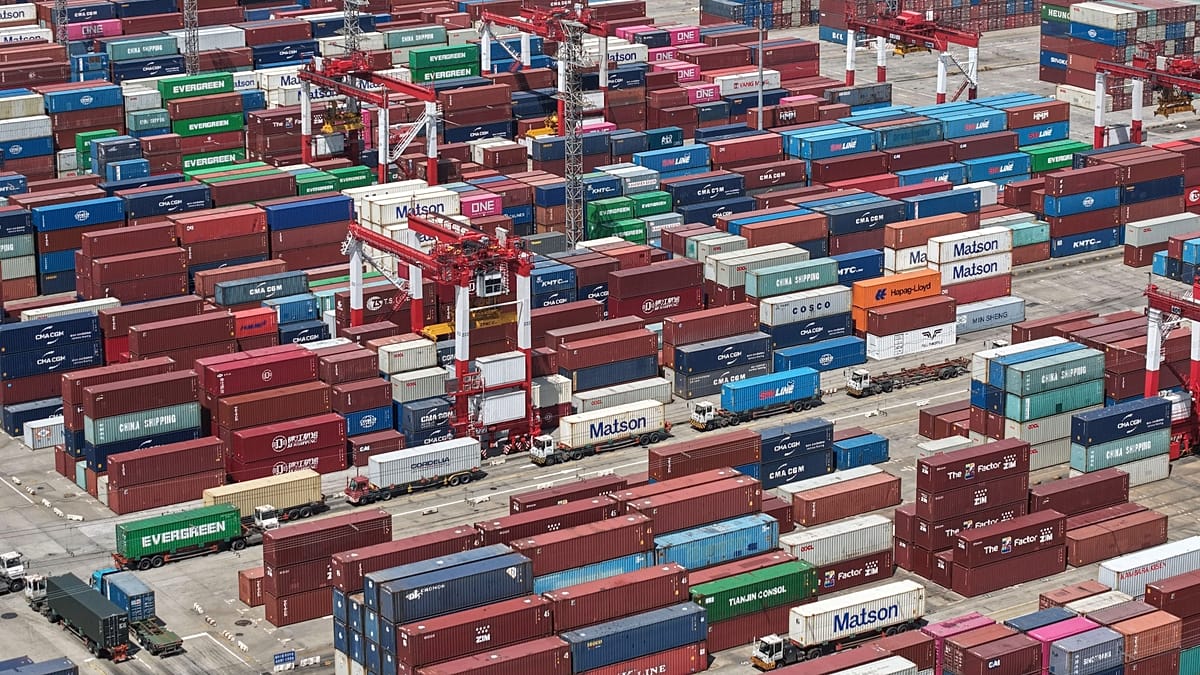
Countries along the Trans-Caspian Corridor, with backing from the European Union, are pushing to make this trade route between Central Asia and Europe faster and more predictable. The current transit time of roughly 35 days for cargo moving from Uzbekistan to Europe is targeted to fall to between 15 and 20 days.
The westbound route typically runs from Uzbekistan through Kazakhstan to the Caspian Sea, by ferry to Azerbaijan, then through Georgia and Türkiye toward Europe. It relies on railways, roads, ports and maritime links functioning together across multiple national transport systems.
Procedures, not just infrastructure
These cooperation efforts were a key topic at the second National Conference on the Trans-Caspian Transport Corridor in Tashkent, which brought together European and Uzbek officials, international financial institutions, and transport companies. TRACECA, the intergovernmental body overseeing the Europe-Caucasus-Asia corridor, said that over the next four years its top priority will be so-called "soft connectivity" — digital tools, border facilitation and simplified procedures — rather than physical infrastructure alone, which officials acknowledge remains uneven along the route.
A European Commission official emphasized the need for tighter coordination across the entire corridor, including shifting documentation to electronic formats and harmonizing customs procedures. The EU's ambassador to Uzbekistan noted that a single, simplified permit system could ease cargo movement by removing the need for separate permits in each transit country.
Challenges and expansion plans
Security in the Black Sea adds further complications, with a recent rise in attacks on civilian vessels and port infrastructure. New rail links connecting Azerbaijan, Armenia, Nakhchivan and Türkiye are seen as important for linking larger segments of the corridor.
Uzbekistan, one of only two doubly landlocked countries in the world, plans to expand its involvement in Caspian port infrastructure and invest in ports in Georgia and along the Black Sea. Meanwhile, a planned high-speed passenger rail line between Tashkent and Samarkand is intended to free up freight capacity, while a new rail connection with China and Kyrgyzstan could significantly boost cargo volumes heading toward European markets.