Trump's 'economic D-Day' threat against Iran leaves experts skeptical without clearer strategy
Nearly six months after promising a swift victory over Iran, President Trump is preparing a new economic pressure campaign, but analysts question whether it can succeed absent a coherent overall strategy.
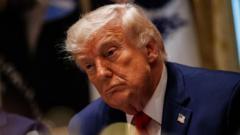
The standoff between the United States and Iran shows no sign of resolving through either military victory or negotiation. To shift the dynamic, President Donald Trump has promised an "economic D-Day," under which countries continuing to do business with Iran would face severe economic consequences.
Treasury Secretary Scott Bessent is expected to detail the plan at a news conference on 24 August. Speaking to CNBC, he already signaled that Washington is prepared to act against any country — ally or otherwise — deemed to be helping Iran evade pressure, whether by buying its oil or facilitating money transfers. Vice-President JD Vance described the sanctions as a "new phase" of the conflict, calling economic pressure the most effective tool currently available to the US.
Iran has faced American sanctions since 1979, with pressure intensifying after Trump's first administration withdrew from the 2015 nuclear deal. In the current conflict, the US has already launched what it calls Operation Economic Fury, combining treasury-led sanctions with a naval blockade of Iranian ports.
Imran Bayoumi of the Atlantic Council said the new announcement likely reflects frustration that neither military nor economic tools have produced the results the administration wants, rather than signaling a fresh, coherent approach. Michael Parker, a former Office of Foreign Assets Control official, said the strategy would likely aim to widen the sanctions' reach by targeting foreign financial institutions in third countries that deal with Iran while remaining tied to the US dollar system.
Sanctions experts note that Iran has proven adept at circumventing restrictions, using "shadow" oil tankers and new, unlisted commercial fronts to keep trade flowing. How effective the new measures prove will depend heavily on the willingness of targeted countries — including US allies like Turkey and Iraq, as well as China — to comply, and some experts doubt China will do so.

