Ukraine's largest drone attack on Moscow hits key oil refinery, prompting psychological shock
Ukraine launched nearly 200 drones in its largest-ever strike on Moscow, targeting a major oil refinery that supplies up to 40% of the capital's petrol. The attack overwhelmed air defenses, caused 17 injuries, and unleashed apocalyptic scenes that brought the war mentally closer to Muscovites.
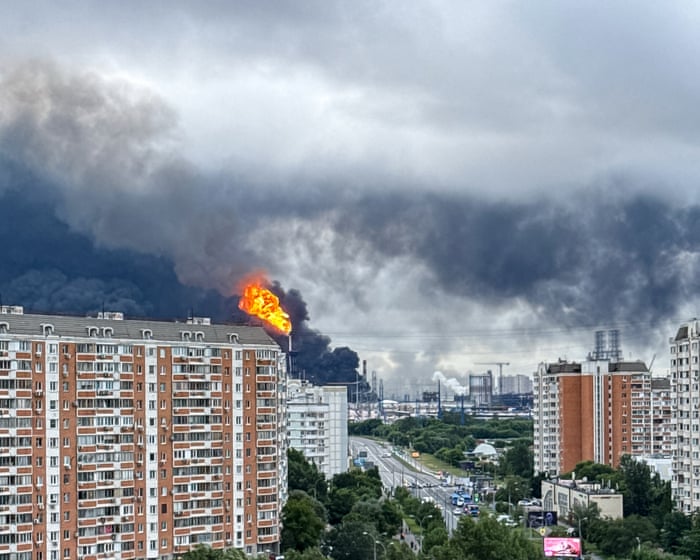
Targets and Damage
On Thursday, Ukraine carried out its most massive drone attack on Moscow since the start of the war, deploying almost 200 unmanned aerial vehicles. The primary target was the large oil refinery in the Kapotnya district on the southeastern edge of the capital, which had already been struck earlier in the week. Video footage showed a fuel tank exploding, sending its roof flying, as flames engulfed one of Moscow's most critical energy facilities. The refinery provides up to 40% of the city's petrol and about half of its diesel fuel. In addition, at least one high-rise residential building, an industrial facility, and several private homes were damaged, with Russian authorities reporting 17 injuries.
How Ukraine Penetrated Air Defenses
Previous drone raids on Moscow were largely thwarted by the capital's dense air-defense network—the heaviest in Russia. This time, however, the sheer scale strained the defenses. Online videos captured Ukrainian drones flying over Moscow almost unchallenged, suggesting some managed to penetrate the layered protection. One clip showed a Russian operator scrambling with a shoulder-launched MANPADS system to shoot down a drone moments before it hit the refinery.
Ukraine also appears to have used new jet-powered missile-drones alongside conventional propeller-driven models. Kyiv publicly unveiled such hybrid systems—including the "Bars" drone-cruise missile—in late 2024 and early 2025. These are faster and harder to intercept, posing a growing challenge for Russian air defenses. Moreover, Moscow faces constraints in deploying its systems: falling debris from intercepted drones or missed missiles risks civilian casualties in a city packed with high-rise blocks.
Psychological Impact and Likely Russian Response
By striking a key oil refinery, Ukraine aims to make ordinary Russians feel the war's consequences. Previous attacks on energy infrastructure caused fuel shortages, notably in occupied Crimea, where residents queued for hours at gas stations. But arguably the greater effect is psychological. For the first time since Russia's full-scale invasion, many Muscovites could look out their windows and see smoke rising over the capital. Russian social media was flooded with videos of frightened residents. In one widely shared clip, a tearful woman says: "The war is here. My windows are shaking. The air is dark and smells of smoke." In Balashikha, a town east of Moscow, locals described a "black rain" covering cars, streets, and buildings in a dark, oily residue.
President Vladimir Putin, who was attending a summit in Kazan, has not yet commented publicly, typically leaving initial responses to officials and state media. Russian hardliners quickly demanded retaliation, with some even calling for nuclear strikes. The most likely response, however, is another wave of large-scale missile and drone attacks on Ukrainian cities, a pattern Moscow has followed after previous high-profile strikes on Russian territory.