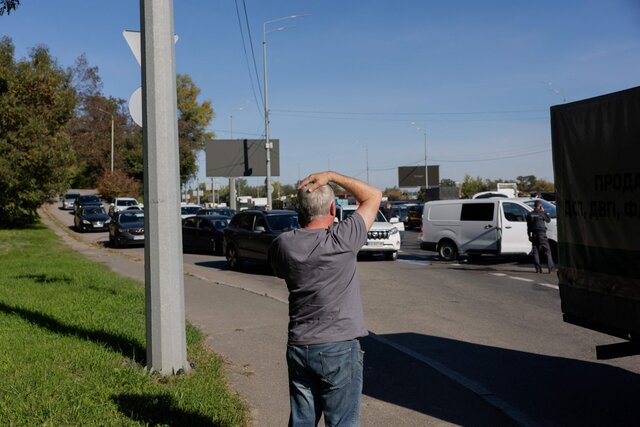
Ukrainian strikes on Wildberries warehouses spark debate over legality and war crimes
Ukrainian drone attacks on Wildberries logistics centers in Russia killed eight people and caused massive losses, prompting legal debates over whether the facilities were legitimate military targets or civilian objects.
The attack and its aftermath
On the night of July 18-19, Ukrainian drones struck Wildberries warehouse complexes in Elektrostal (Moscow region) and Kotovsk (Tambov region). Eight people were killed and dozens were injured. Preliminary estimates put sellers' losses at more than 150 billion rubles.
Legal debate erupts
The strikes immediately sparked a legal debate. Russia's Investigative Committee opened a criminal case under Article 205 (terrorism), not Article 356 (use of prohibited means of warfare).
Kirill Martynov, editor-in-chief of Novaya Gazeta Europe, called Wildberries' logistics centers "legitimate targets" for the Ukrainian military. In contrast, Conflict Intelligence Team co-founder Ruslan Leviev argued that such strikes constitute war crimes, just as similar Russian attacks on Ukrainian logistics centers do.
Comparison with Russian strikes on Nova Poshta
The debate is linked to Russia's repeated strikes on Nova Poshta terminals in Ukraine. Financial Times reporter Christopher Miller, citing a senior Ukrainian official, reported that the Wildberries attack was retaliation for strikes on the Ukrainian company's facilities.
According to Nova Poshta, Russian forces had damaged or destroyed more than 400 of its branches and terminals by early 2026. On June 15, three ballistic missiles hit Nova Poshta's largest sorting center in Kyiv. On July 19, the day after the Wildberries attack, a terminal in Kharkiv was destroyed. The Kharkiv regional prosecutor's office classified that attack as a war crime, opening a case under Article 438 of Ukraine's Criminal Code.
International humanitarian law assessment
The First Additional Protocol to the Geneva Conventions prohibits attacks on civilian objects. Military objectives are objects that by nature, location, purpose, or use make an effective contribution to military action and whose destruction offers a definite military advantage.
A lawyer who spoke to Meduza on condition of anonymity said the Wildberries warehouses are unlikely to meet the criteria for military objectives. The mere presence of dual-use goods, without knowledge they will be used specifically for military purposes, does not satisfy the requirement that an attack secure a definite military advantage.
Even if Russia's Defense Ministry were using Wildberries to ship weapons, the principle of proportionality would apply. If weapons constitute only a negligible share of stored goods, an attack could be excessive and violate international humanitarian law.
International Criminal Court jurisdiction
The ICC could investigate attacks on Russian soil only if Russia had ratified the Rome Statute, which it has not. However, in 2024 the ICC issued arrest warrants for four Russian military personnel over strikes on civilian infrastructure in Ukraine, charging them with intentionally directing attacks against civilian objects.
Ukraine signed the Rome Statute in 2024 but with a seven-year caveat: ICC jurisdiction over Ukrainian personnel begins only in 2031. Therefore, the ICC is unlikely to investigate the Wildberries strikes but could potentially classify Russian strikes on Nova Poshta as war crimes.