Germans once volunteered in Russian and Belarusian care homes — Moscow's new war ended that legacy
From 1990 to the 2000s, Germans doing alternative civilian service traveled to Russia and Belarus to work in hospitals and care institutions, partly to atone for Nazi-era crimes. Russia's war in Europe brought this decades-long exchange to a close.
After World War II, West Germany went without its own armed forces for years, and its constitution guaranteed citizens the right to refuse military service on grounds of conscience by performing alternative civilian service in social care instead. In the 1980s, pacifist groups won permission to carry out this service abroad, in countries that had suffered under Nazi aggression.
One such organization, Action Reconciliation Service for Peace (ASF), worked with other NGOs to send young Germans to Russia and Belarus. In early-1990s Moscow, a center called Compassion was set up within Memorial to assist victims of Soviet-era political repression, with volunteers helping elderly people who lived alone by cooking, cleaning, and shopping for them.
According to Memorial board member Sergey Krivenko, Germans served in at least Moscow, St. Petersburg, Volgograd, and Perm in Russia, as well as Minsk in Belarus. Numbers were modest — Moscow hosted roughly 10 to 20 volunteers a year — but hundreds of young Germans passed through Russia and Belarus over the years. Their trips were funded through donations to civic organizations rather than by any government.
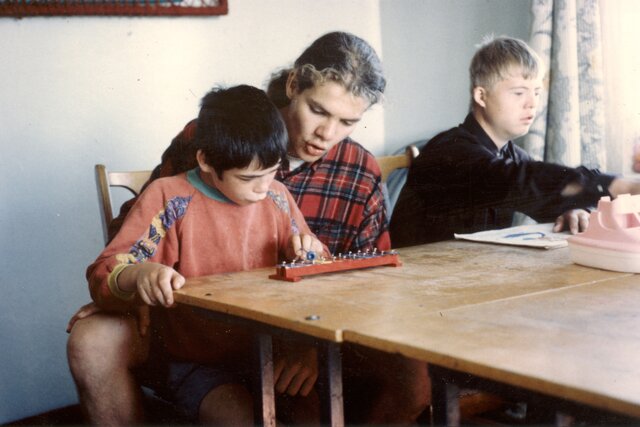
Many arrived without speaking Russian and picked up the language on the job, largely through contact with survivors of political repression. Beyond elder care, volunteers also worked in children's residential institutions and facilities for people with mental and neurological disabilities, where interviews describe difficult conditions, including understaffing that at times led to children being restrained in their beds.
The program ran from the early 1990s through the late 2000s. In 2011, Germany abolished compulsory military service and moved to a professional army, which reduced the pool of Germans working in social care, though volunteer trips to post-Soviet countries continued for a time afterward. Russia's launch of a new war in Europe ultimately brought this long-running exchange to an end.