Is the US too cautious to confront China directly on trade?
While official Chinese imports to the US have fallen sharply, goods are increasingly rerouted through third countries, and Washington avoids tackling the core issue — China's undervalued yuan.
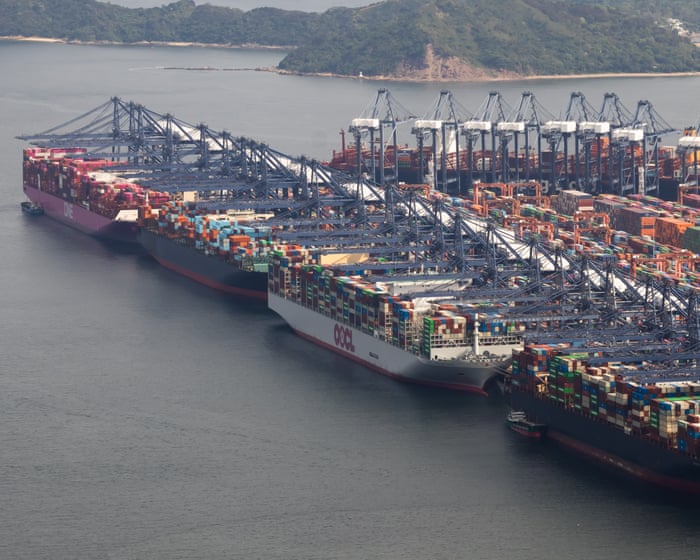
Since China offered a truce in the trade war last October, following threats to cut off rare-earth magnet supplies, the Trump administration has largely stopped escalating tensions. Official imports from China fell 40% in the year to June compared with the prior year, prompting talk of victory in Washington.
But that picture is misleading. The White House was recently forced to acknowledge that a drop in direct imports from China doesn't mean less Chinese-made content is reaching American consumers — much of it is simply rerouted through other countries. Trade adviser Peter Navarro voiced frustration over Chinese-made motors installed in recliners imported from Vietnam, citing a Commerce Department analysis estimating $67bn worth of Chinese goods were transhipped through Mexico, India and Vietnam in 2025.
The administration released a report titled "The Great Transhipment Scam," warning that rerouted components — from power supplies to furniture parts — passing through countries like Mexico, Vietnam, Malaysia, Poland or the UAE undermine American manufacturing jobs. A new AI-powered tool was also unveiled to continuously scan shipping documents and flag rerouted goods.
However, these measures are unlikely to restore lost manufacturing jobs, since US manufacturing employment has remained roughly flat over the past decade despite efforts by multiple administrations. The overall US import bill also continues to rise, and China's exports have kept growing regardless.
The undervalued yuan as a more direct lever
A more effective tool, the piece argues, would be addressing the undervaluation of China's currency, the yuan, which fuels its export dominance. Economists note the yuan's weakness reflects deeper structural issues — low household consumption in China and a large US budget deficit. Still, history shows currency adjustments can meaningfully shift trade imbalances, as seen with the 1980s Plaza Accord, which weakened the dollar and helped narrow the US trade gap with Japan.
The US already holds a tool for this: Section 301 of the Trade Act, which allows tariffs against countries that deliberately undervalue their currency. Europe could pursue a similar approach, tying trade protections to China's currency policy. But such a strategy would require sustained coordination with allies and diplomatic patience — something Washington has so far avoided, opting instead for easier but less effective measures targeting third countries.
/nginx/o/2025/03/21/16727212t1h3117.jpg)

