Latvian Government Reviews Plan for Five Patient Priority Groups in Children's Healthcare
On 6 November the Latvian government noted a Health Ministry report on children's healthcare access. It proposes five priority groups with different waiting limits and pilot projects starting in 2027.
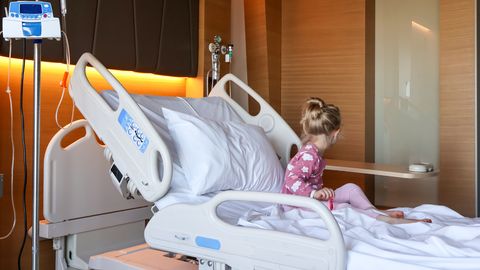
The Latvian government on 6 November took note of an informative report from the Ministry of Health on improving access to children's healthcare. The document proposes introducing five patient priority groups and setting waiting times according to how urgent a child's condition is: the higher the priority, the shorter the permissible wait. The proposals were drawn up under a task in the government declaration to prepare the children's healthcare system for an integrated care model and for the abolition of quotas for children's services.
The five groups
The first, urgent group would cover patients with a life-threatening condition, suicide risk or a rapidly progressing illness. The second is a high-priority group, where delaying help creates a significant health or developmental risk. The third, standard group, would apply when a short delay does not significantly worsen the prognosis. The fourth is meant for planned assessment or preventive care, and the fifth for monitoring when intervention is not currently needed.
The accompanying presentation gives sample deadlines: in dentistry, 24–48 hours for acute pain, up to 30 days for progressing caries, and up to 60 days for planned treatment. In children's mental health, up to 24 hours in an immediate risk to life or safety, up to 14 days when risk is rising quickly, and up to 30 days for persistent symptoms. These are examples, not established standards.
Triage, regions and mental health
Clinical triage, meaning assessment under uniform urgency and risk criteria, is proposed for paediatrics, ophthalmology and children's mental health. Paediatric support would be provided closer to home, specialist care in regional multi-profile hospitals, and highly specialised care at the Children's Clinical University Hospital (BKUS).
For mental health, a multi-level model is suggested: a nurse or psychologist would make first contact, while a child psychiatrist would join in more complex cases. Currently, first-time access is often arranged directly with a psychiatrist. BKUS estimates the initial phase of the model at 252,293 euros.
Pilot projects in children's mental health and ophthalmology are due to begin in 2027.
Why queues form
The ministry says queues result from several factors, not only insufficient funding, including a shortage of medical staff and the concentration of specialists in Riga. According to the National Health Service, the average wait is 116 days for children's dentistry in Latgale, 127 days for a children's ophthalmologist in Vidzeme and 136 days for a children's endocrinologist in Riga.