Latvia's government: reduced fuel excise tax should stay until year-end
An Economy Ministry report shows diesel prices in Latvia were 27-30% higher in August than in February before the Middle East conflict began, but the reduced excise rate has eased price pressure and should remain in place through the end of the year.
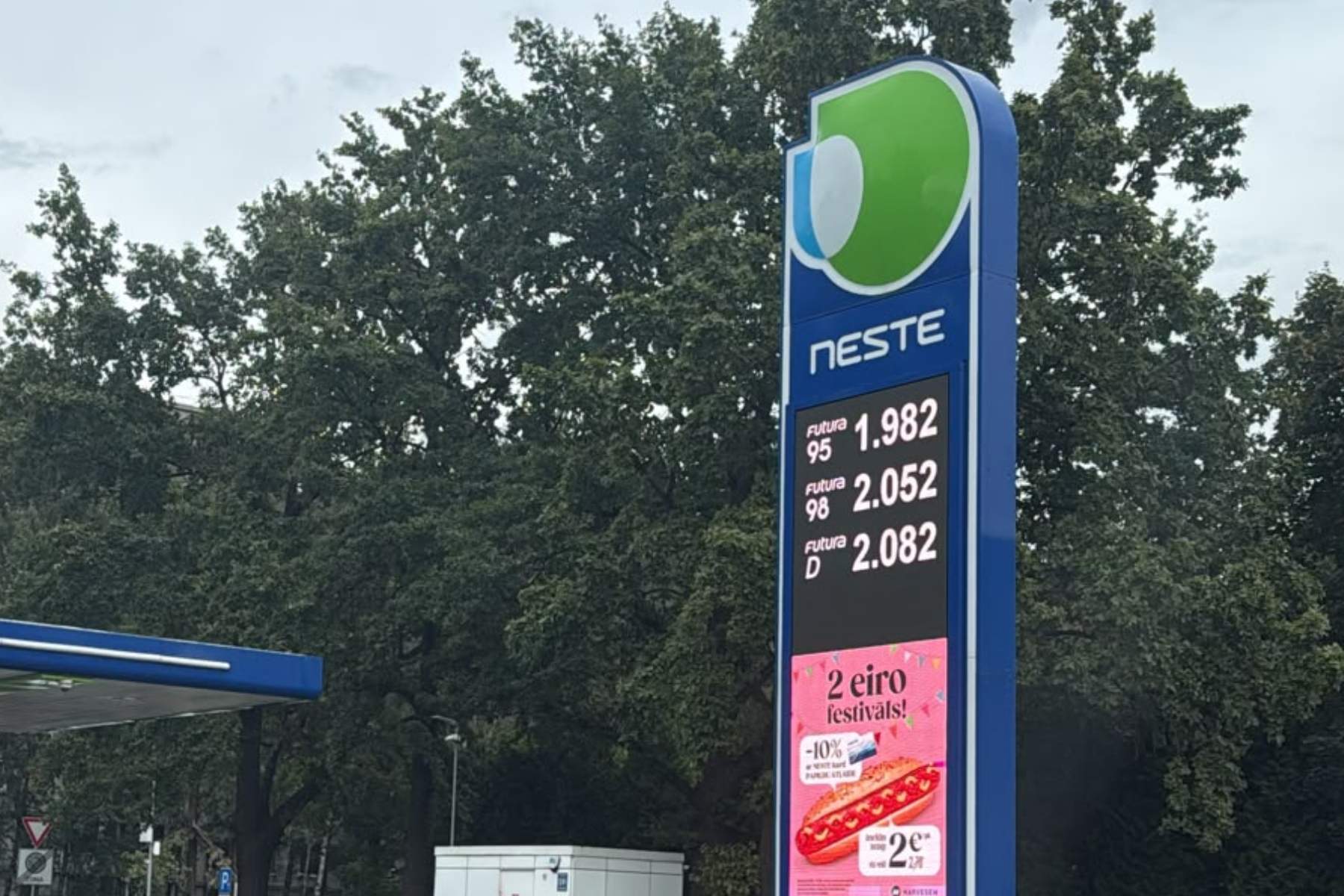
On Tuesday, Latvia's government approved an Economy Ministry (EM) report on fuel price trends and the operation of the law limiting oil product price increases, prepared at the request of the Saeima's Budget and Finance (Tax) Committee.
According to the report, the average retail price of diesel in Latvia reached €1.93 per liter in August — 27-30% higher than in February, before the conflict in the Middle East escalated. The ministry explains that after prices fell in May and June, driven by a temporary US-Iran agreement reached in June and partial resumption of shipping through the Strait of Hormuz, prices climbed again in July and August as that agreement proved unstable.
Retail markups remain stable
The ministry notes this aligns with findings from the Competition Council, which concluded that the price rise was mainly driven by international purchase prices rather than retailer markups, which stayed relatively stable. At the same time, the excise tax cut was only partially reflected in prices — about 58-64% of the potential reduction.
Impact on inflation and the budget
The cumulative effect of fuel prices on inflation from January to July was about 0.3 percentage points, though August's price increase could push this figure higher. For the April-to-June period, the shortfall in excise revenue compared to the standard rate reached €19.4 million, partly offset by higher VAT revenue. The EM stresses that a final conclusion on the measure's overall fiscal impact cannot yet be drawn.
Recommendation to keep the tax cut until year-end
The report concludes that prematurely ending the reduced excise rate would put direct upward pressure on prices, raising risks for inflation and business costs. The reduced rate should therefore remain in place while the risk of a price shock stays elevated, but no later than the end of the year. One possible criterion for restoring the standard rate could be the exchange price of diesel staying below $1,000 per ton for at least a month. The EM also points to gaps in price monitoring, since retailers currently report average prices only once a week, which limits accurate assessment of prices actually paid by consumers.
/nginx/o/2026/04/01/17538756t1hdddd.jpg)
