For Russians, a Summer Vacation Abroad Is Now a Luxury Few Can Afford
Economic uncertainty, Ukrainian drone strikes, and Western sanctions have reshaped how Russians spend their summer holidays, with international travel becoming costly and complicated while domestic tourism sees a sharp decline.
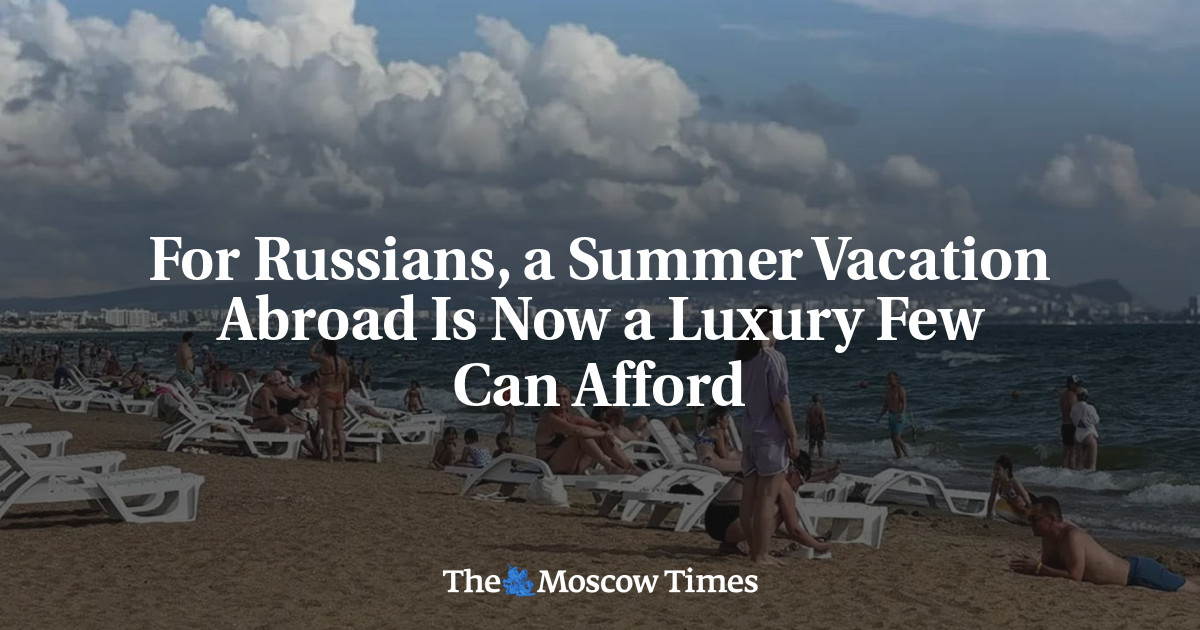
Russians' summer holiday planning has been profoundly altered by economic instability and security risks from Ukrainian drone attacks. While residents of major cities like Moscow and St. Petersburg, who have historically traveled abroad more, still seek ways to take international trips, many in the regions opt for domestic destinations—if they can afford to travel at all.
Before the full-scale invasion of Ukraine, western Russians could reach major European cities on a single direct flight. Now such trips require multiple connections, complicated by Russia's isolation from the international financial system, growing visa restrictions, and repeated airport closures during Ukrainian drone attacks. According to the Association of Tour Operators of Russia (ATOR), over 80% of Russians booked their own holidays in 2025, but tour operators report a surge in requests from experienced travelers who can no longer rely on global low-cost airlines and accommodation platforms that left the Russian market after the invasion.
With Europe increasingly out of reach, some Russians are turning to Asia and Africa. China's decision to extend visa-free entry for Russian tourists until the end of 2027, along with rising popularity of Hong Kong, Vietnam's Phu Quoc Island, and Tanzania, reflects this shift. However, for many Russians outside the capital, domestic tourism remains the only realistic option.
Russia's Black Sea coast and annexed Crimea, traditionally favored holiday spots, are experiencing steep tourism losses. Hotel bookings in Crimea fell 30% in May and June, and travel companies lost 1.5 billion rubles in June due to cancellations. Intensified Ukrainian strikes on supply routes and oil refineries have caused acute fuel shortages. With local airports shut and rail services halved, the peninsula is largely inaccessible to tourists.
Some Russians are replacing Crimea with Anapa, whose beaches reopened after the 2024 oil spill, though locals still find fresh oil slicks. Meanwhile, hotel owners in Sochi report a booking decline of up to 25%. Many Russians are not traveling at all—cancellation rates rose from 24% to 33%, and visits to Lake Baikal dropped by a third due to rising prices.