Nearly 3,000 Salmon Smolts Released into Venta River near Kuldīga
On May 19, almost 3,000 salmon smolts bred at the BIOR institute's fish farm "Pelči" were released into the Venta River near the old brick bridge in Kuldīga. The event involved environmental and municipal authorities to help replenish the river's declining salmon population.
Nearly 3,000 salmon smolts – juveniles that have reached the stage ready for migration to the sea – were released into the Venta River near Kuldīga's old brick bridge on May 19. The fish were raised at the fish farm "Pelči" of the Institute of Food Safety, Animal Health and Environment (BIOR). Representatives from BIOR, the State Environmental Service, and Kuldīga Municipality Police participated in the release.
The Venta is one of Latvia's salmon rivers, but its salmon resources are declining due to climate change and river overgrowth. To improve the situation, artificially bred salmon and trout juveniles are released annually. This season, the “Pelči” fish farm has released a total of 100,000 salmon and 80,000 trout.
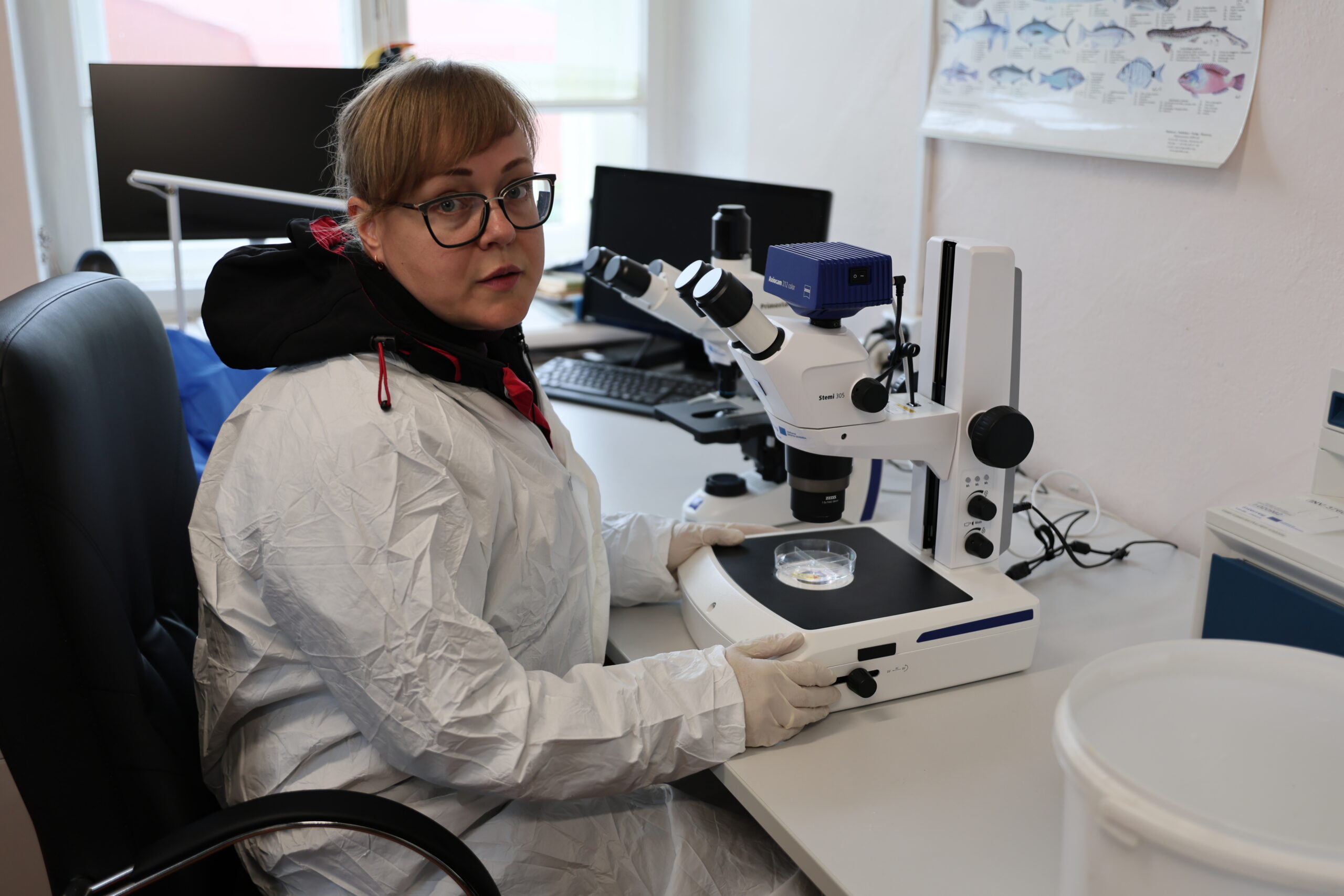
Olga Revina, a researcher and veterinarian at BIOR, explained her extensive duties in monitoring fish health and the breeding process. Her responsibilities include assessing the health of broodstock, controlling egg fertilization, and recording detailed data for each fish. Eggs are checked weekly, removing dead ones. After hatching, careful rearing follows, including feeding, tank cleaning, and health monitoring. Treatment is applied if needed, with antibiotics as a last resort. Salt is widely used to reduce stress and improve fish health.
The released smolts are about a year old and weigh an average of 40 grams, exceeding the minimum requirement of 20 grams set by Cabinet regulations. To avoid stress, the temperature difference between the transport container and the river must not exceed three degrees; the actual difference was 0.7 degrees. Before release, the fish have their adipose fin clipped – a marking method used for eight years at the farm to distinguish hatchery-reared fish from wild ones.
Jānis Sprugevics, chief inspector of the Fishing Control Division of the State Environmental Service, noted that the release site was chosen considering the presence of predators and anglers. To give the young fish time to adapt, the release took place on a Tuesday, when fishing is banned on the Venta, and the area is monitored by police in the following days.