History reveals fatal Latvian Air Force crashes in Latgale between the world wars
Historical research uncovers several fatal crashes involving Latvian Air Force Regiment aircraft in the Latgale region during the 1930s, near the Daugavpils and Krustpils airfields. Between 1920 and 1940, 46 regiment servicemen died in total, ten of them in Latgale.
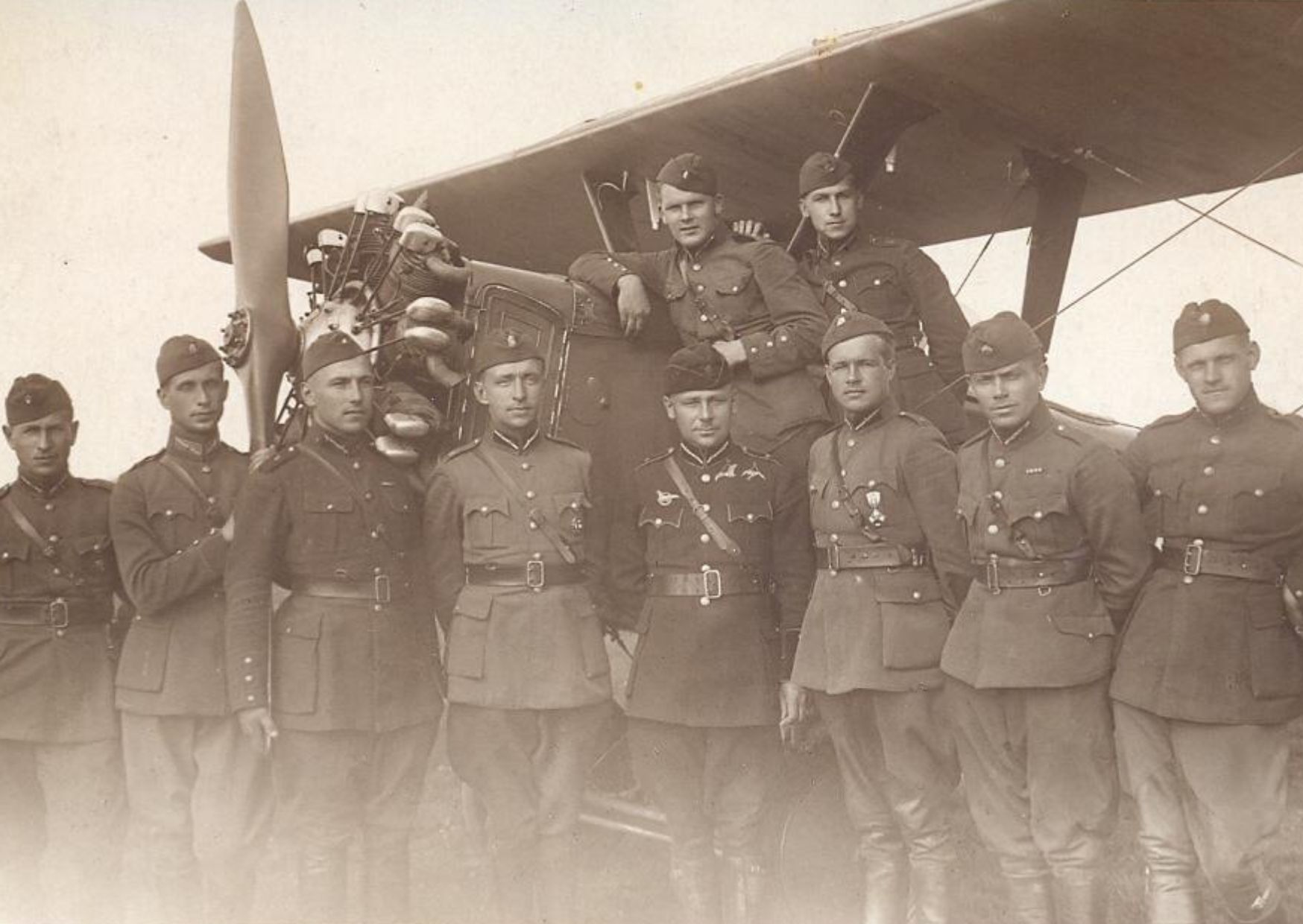
After Latvia's War of Independence, the national army worked to strengthen its defence capabilities, including building Air Force Regiment airfields and bases in several locations, including Latgale. Given the state of aviation technology and pilot training at the time, aircraft accidents were relatively common, and several proved fatal.
On 29 August 1931, warrant officer Augusts Lapiņš was flying a training mission near Daugavpils airfield in an ADC-1 Martinsyde fighter, simulating an attack on an aerial target towed by another aircraft. Misjudging the distance, he collided with the target, damaging the wing structure and causing a crash. He died despite the aircraft being equipped with a parachute, which he failed to use in time.
On 20 July 1934, during a planned training flight from Riga to Daugavpils, First Lieutenant Teodors Švānbergs crashed near Krustpils airfield. After a sharp maneuver at around 200 metres, the aircraft became uncontrollable and went into a spiral dive. The severely injured pilot died on the way to hospital.
On 15 June 1936, near Daugavpils airfield, Captain-Lieutenant Hugo Freimanis crashed his Bristol Bulldog fighter after misjudging his distance to the airfield. He was thrown from the cockpit as the aircraft caught fire, and later died en route to hospital. A week earlier, on 22 June, warrant officer Kārlis Iesalnieks died in Krustpils when his aircraft lost a wing during an aerobatic maneuver and crashed.
The pilots who died ranged in age from 24 to 35 and came from various regions of Latvia. Several had served in the War of Independence and received state honours. The Latvian press at the time criticised the regiment's technical equipment, though similar accident rates affected aviation forces across Europe. In response to safety concerns, the regiment gradually introduced parachute training from late 1929, which became regular practice starting in 1931.