Vike-Freiberga: Trump Wants a Nobel Prize, Hence the Push for Peace in Ukraine
Former Latvian President Vaira Vike-Freiberga said on Latvian public TV that Donald Trump's drive for peace is tied to his wish for a Nobel Prize. Meanwhile, the US, Ukraine and Russia are preparing to resume trilateral talks, though the date and venue remain unclear.
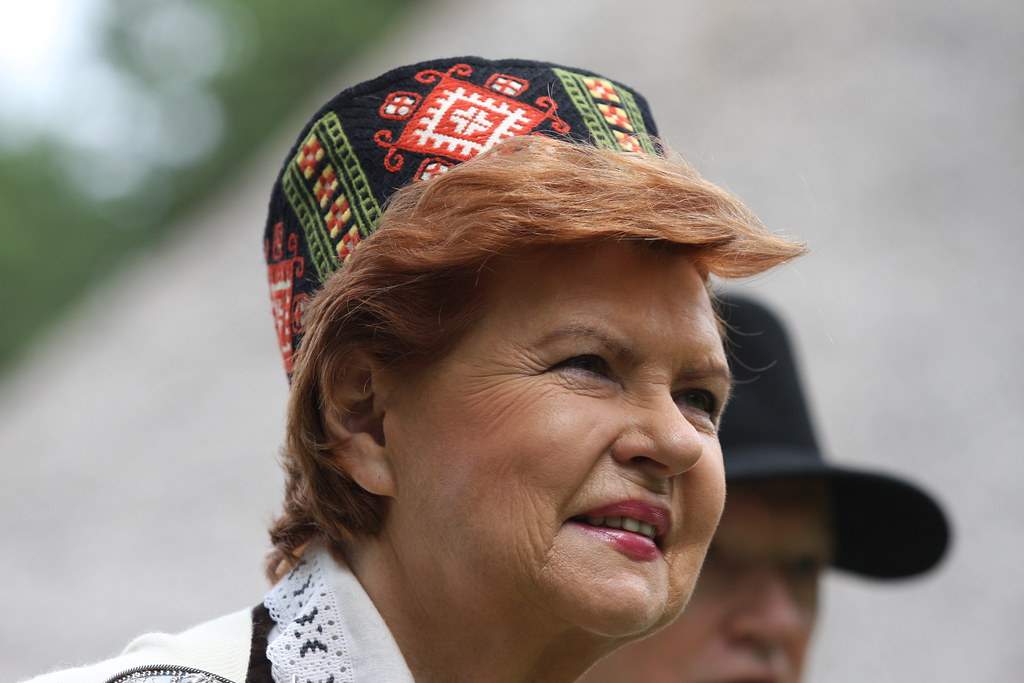
Vaira Vike-Freiberga, who served as Latvia's president from 1999 to 2007, commented on US President Donald Trump's stance on Russia's war in Ukraine during the Latvian Television (LTV) programme "Kas notiek Latvijā?" (What Is Happening in Latvia?). She argued that Trump wants the Nobel Peace Prize and is so eager for peace that he listens to Vladimir Putin's claims that Ukrainian President Volodymyr Zelensky is an illegitimate leader. She noted that the prize went to former US President Barack Obama, and in her view Trump has never forgiven anyone for that. These are her personal assessments.
Course of the talks
Her remarks come as a new attempt at peace negotiations has been under way for a couple of weeks. Ukraine, Russia and the United States have agreed in principle to resume trilateral talks. On 31 October, after meeting Turkish President Recep Tayyip Erdogan, Zelensky said they should take place in the first half of November. He had earlier mentioned a meeting in Abu Dhabi from 6 to 10 November. Putin's foreign policy adviser Yuri Ushakov said Moscow had not proposed a specific date and that timing would depend on the situation at the front and the war in the Middle East. As of the evening of 2 November, the meeting had not been fully confirmed.
The resumption became possible after Trump's special envoy Steve Witkoff met Putin in St Petersburg on 21 October. The Kremlin said Putin had agreed in principle to technical-level talks, which would also cover security guarantees after the war.
Smaller steps before a big deal
Since a full ceasefire has not been achieved, the US is pursuing limited arrangements. Secretary of State Marco Rubio said on 31 October that interest is growing in a limited truce in the Black Sea that would protect grain shipping. From 27 October to 1 November a humanitarian ceasefire operated around Oleshky in the Kherson region, during which almost 800 people were evacuated. Ukraine accused Russia of using the pause to strengthen its positions.
The core disputes remain unresolved: the Kremlin demands control of the Donetsk region and Ukraine's renunciation of NATO membership, while Kyiv seeks security guarantees and European participation. Fighting has not stopped; on 2 November Zelensky said a Russian air strike on the village of Komyshuvakha in the Zaporizhzhia region killed 18 people.