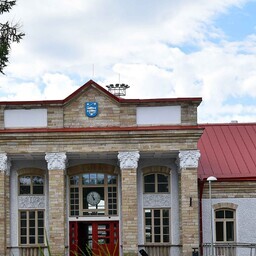
Protesters urge Vilnius University to cut ties with Israeli institutions
Dozens of people rallied in Vilnius' Daukanto Square demanding that Vilnius University end academic and economic cooperation with Israeli institutions. The university said it supports students' right to voice concerns and that it evaluates partnerships responsibly.

Dozens of people gathered on Thursday in Daukanto Square in Vilnius, the Lithuanian capital, to demand that Vilnius University, the country's largest higher education institution, sever its academic and economic ties with Israeli institutions. Participants chanted pro-Palestinian slogans and held placards calling for sanctions against Israel. The organisers are waiting for a response from the university leadership to an open letter submitted six months ago and signed by several hundred members of the academic community.
What the letter asks for
The letter calls on the university to cut ties with Israeli institutions, to recognise mass crimes committed by Israel, and to offer Palestinian students the chance to study there, as it has done for Ukrainian students since 2022. Protesters also criticised current exchange programmes and research projects with Israeli universities, including Tel Aviv University and Ben-Gurion University, which they link to Israel's arms industry. Some participants alleged that the university's Israeli partners contribute to the country's military operations.
Leja Kalvelytė, a representative of the pro-Palestinian Vilnius University students' organisation, said the demand covers the severance of academic and economic ties. She argued that Israel should be treated internationally in the same way as Russia, which has been excluded from various international, sporting and cultural events after its invasion of Ukraine. Another protester, Ignas Galinis, said the university should not cooperate with institutions that, in the protesters' view, contribute to Israel's actions in Palestine. He also criticised earlier decisions to host lecturers from an Israeli university located in occupied Palestinian territories, likening it to accepting lecturers from Russian-occupied Crimea.
The university's response
Vilnius University said it respects and supports students' right to raise concerns and express views. It described differing opinions on complex and sensitive issues as a natural part of an open academic community. The university added that it respects the decisions of international legal and political organisations and expects them to be implemented.
The institution said it has longstanding ties with independent Israeli universities with academic autonomy, and that this cooperation rests on practices reflecting the academic community's commitment to democracy. Decisions on academic cooperation, it said, take into account Lithuania's foreign policy, its international commitments, and the principles of academic freedom and non-discrimination.