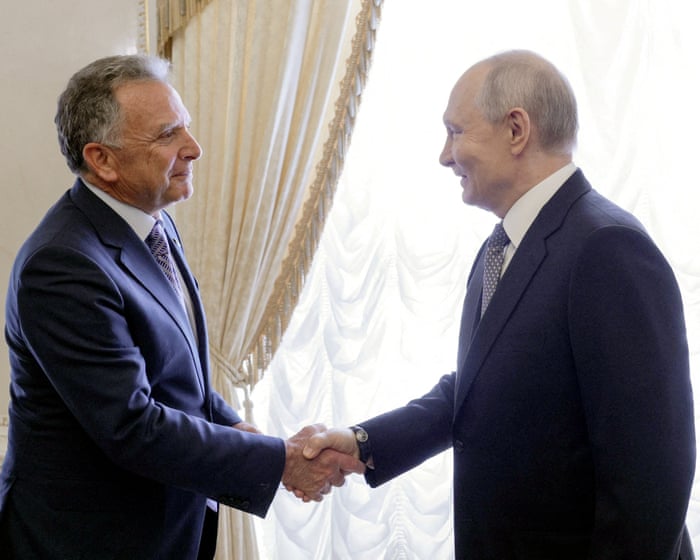
Witkoff Meets Putin for the Ninth Time as Commentator Doubts Peace Talks Will Yield Results
US special envoy Steve Witkoff held three hours of talks with Russian President Vladimir Putin in St Petersburg on ending the war in Ukraine. In a column for Latvia's NRA, Ben Latkovskis argues there is little ground for hoping for a breakthrough.
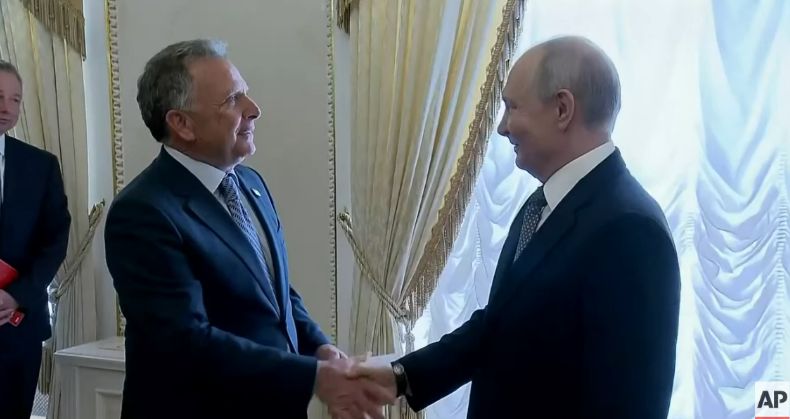
Steve Witkoff, special envoy of US President Donald Trump, met Russian President Vladimir Putin in St Petersburg on 21 October to discuss ending the war between Russia and Ukraine. The talks lasted three hours and were the ninth meeting between Witkoff and Putin. No official communiqué was issued. Commentator Ben Latkovskis writes in the Latvian outlet NRA about whether this round could differ from earlier ones; what follows mainly reflects his assessment.
What is known about the meeting
Witkoff was greeted at Pulkovo airport by Kirill Dmitriev, Putin's special representative. The second Trump envoy, his son-in-law Jared Kushner, took part remotely because he was ill with flu. Latkovskis notes that neither man holds an official post confirmed by the US Senate, so their missions are unofficial in nature.
Before the meeting, Politico reported that Witkoff would offer Putin direct talks with Trump and Ukrainian President Volodymyr Zelensky. Putin has repeatedly rejected such a meeting. Axios, citing a source in the White House, wrote about an updated plan to end the war. A day earlier, Trump's negotiators met Zelensky and European representatives in Oslo.
The author's assessment
Latkovskis criticises the lack of detail behind the "updated plan". The only concrete item he cites is Kushner's demand that Ukraine stop attacking Russian oil refining and export companies. Before the meeting, Putin released Stephen Hubbard, a 73-year-old US citizen convicted of mercenary activity.
The author recalls that Russian Foreign Minister Sergey Lavrov said just before the talks that Russia would not agree to demands to back down. Latkovskis argues that Russia's aims, including Ukraine's demilitarisation and renunciation of NATO membership, are clearly stated and unchanged, so territorial concessions would not satisfy Putin.
He also points to Ukraine's dependence on US intelligence and Patriot missile deliveries, and asks which side the US is on. In his view, hope for peace could emerge only if, after the US midterm elections on 3 November, Republicans conclude that Trump's approach is harming the party.